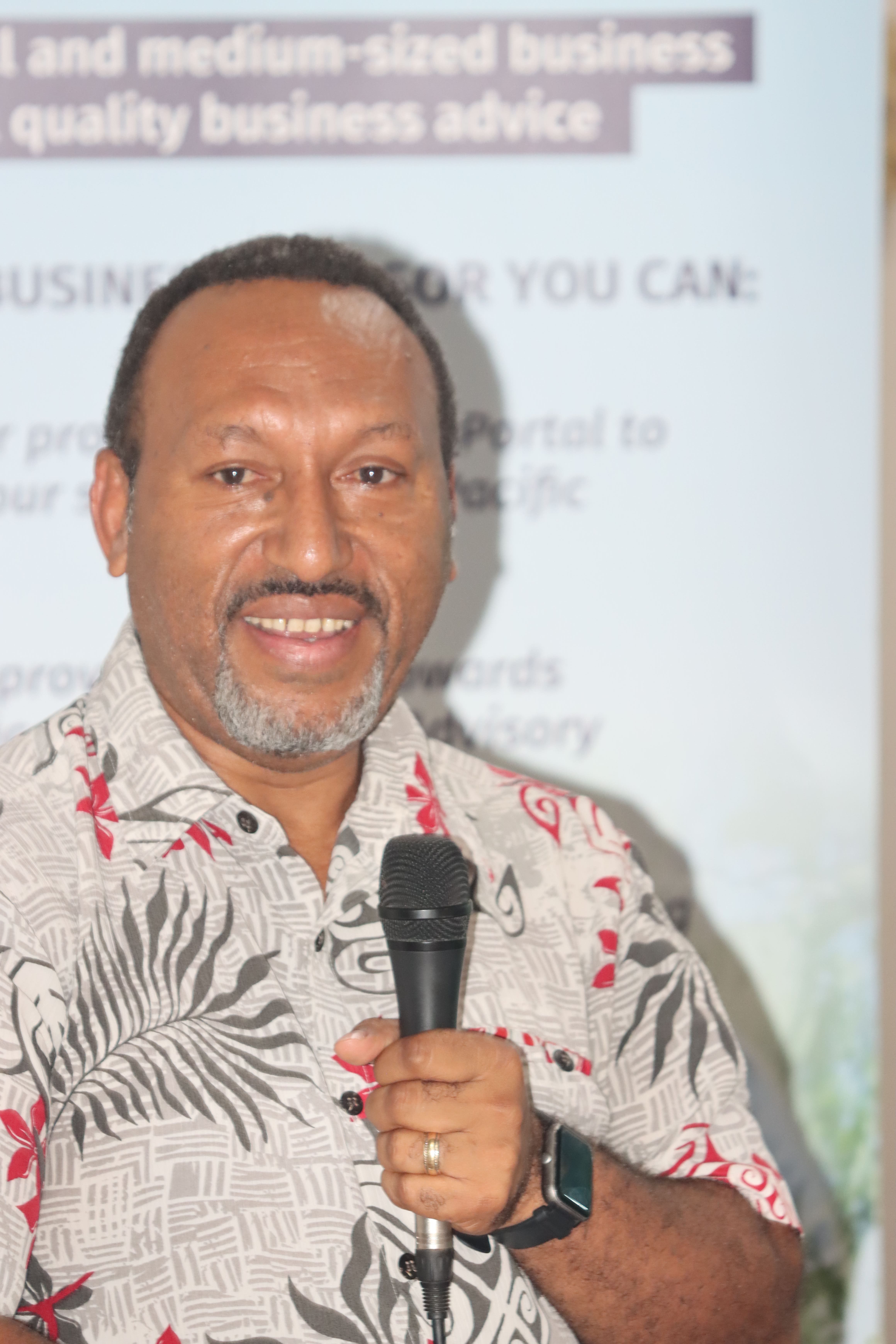
For Captain Clarke Piokole, a former Air Niugini pilot turned entrepreneur, success is measured not by the number of commercial properties developed, but by the lives transformed through the opportunities they create.
Through CT Hub, an MSME-focused commercial initiative he established in Port Moresby, Captain Piokole is helping local entrepreneurs, particularly women and young people, access affordable business spaces, generate income and improve their livelihoods.
CT Hub forms part of the wider Waigani Estate business community, which includes Unity Mall and other commercial establishments. Collectively, this business community accommodates an estimated 300 micro, small and medium-sized enterprises (MSMEs).
“For me, this is about creating opportunities. It is about helping people move from informal economic activity into sustainable businesses that generate income, create employment, and improve the livelihoods of their families,” Captain Piokole said.
After approximately 20 years as a pilot with Air Niugini, Captain Piokole transitioned into property development, applying the discipline, planning and accountability gained throughout his aviation career.
Recognising that high commercial rental costs prevented many aspiring entrepreneurs from establishing businesses, he developed CT Hub to provide smaller, more affordable commercial spaces.
However, establishing the initiative required considerable personal sacrifice.
In 2022, he sold an investment property to reduce his financial commitments and relied on assistance from friends to establish his first CT Hub unit.
Financial difficulties later threatened the business when struggling tenants could not meet their rental obligations. Support from Pacific Palms Properties, through a repayment arrangement, enabled CT Hub to continue operating.
“At one point, the situation became so difficult that I feared we could lose everything we had worked so hard to establish,” he recalled.
The experience strengthened his understanding of the challenges facing MSMEs and reinforced his determination to help other entrepreneurs overcome similar barriers.
One of CT Hub’s notable achievements is its affordable shelf-rental initiative, enabling online retailers to establish a physical commercial presence for just K250 per month.
The arrangement provides product display space and convenient customer collection points without requiring entrepreneurs to lease entire shops.
To date, the initiative has supported 25 microbusinesses, improving their market visibility and customer accessibility.
Significantly, several entrepreneurs have progressed from renting shelf space to securing their own retail shops within one year, with some expanding into larger commercial premises.
These achievements demonstrate how affordable entry points can help emerging businesses grow into more established enterprises.
CT Hub’s chair-rental initiative has also created economic opportunities for young women in the hairdressing industry.
Through affordable arrangements within established salons, hairdressers can operate independently, manage their customers and increase their earning potential.
According to Captain Piokole, some participants previously earned between K300 and K400 per fortnight while working for employers. Under the chair-rental model, they can now earn comparable amounts within two to three days.
Many recover their monthly rental costs in fewer than ten days, allowing additional earnings to support their families and businesses.
Approximately 90 per cent of participating entrepreneurs are young women, with more than 30 hairdressing chairs currently being rented.
“It has been incredibly rewarding to witness the transformation in their lives,” Captain Piokole said.
Beyond improved earnings, the initiative is helping participants develop business confidence, financial independence and practical entrepreneurial skills.
Captain Piokole believes affordable premises alone cannot guarantee business success.
“I believe finance is an important enabler of business growth, but money alone does not create a successful business. An entrepreneur must know how to use that money productively,” he explained.
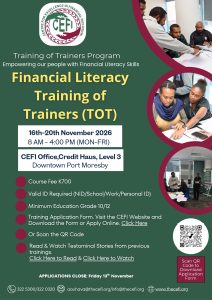
His experience has highlighted the importance of financial literacy, proper record-keeping, cash-flow management and business planning in sustaining emerging enterprises.
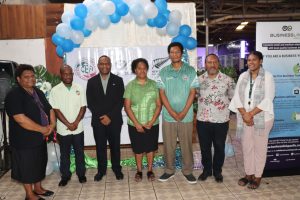
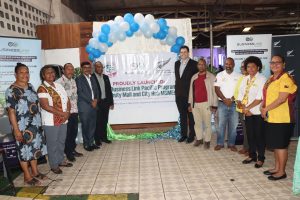
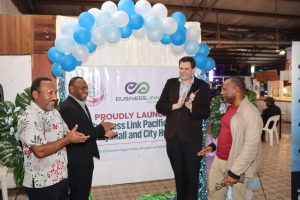
He therefore welcomes the Business Link Pacific (BLP) Programme, implemented through the Centre for Excellence in Financial Inclusion (CEFI), as an opportunity to strengthen support for entrepreneurs operating within CT Hub, Unity Mall and the wider Waigani Estate business community.
Through the programme, eligible MSMEs may access business diagnostics, professional advisory services, financial literacy support and potential financing pathways.
These services could help entrepreneurs address operational challenges, improve financial management and prepare for expansion.
Looking ahead, Captain Piokole envisions transforming Waigani Estate into what he describes as Papua New Guinea’s MSME Capital an integrated business ecosystem combining affordable premises with financial services, mentoring and professional business support.
He hopes the model can eventually be adapted to other provinces, creating opportunities for entrepreneurship, employment and wider economic participation.
For Captain Piokole, the true measure of success lies in the number of businesses that become sustainable, create employment and improve family livelihoods.
“I would like my legacy to be measured not simply by the provision of making available a vast number of commercial properties for MSMEs, but by the number of success stories that are produced from these MSME hubs,” he said.
The progress of emerging retailers and independent female hairdressers demonstrates how practical business opportunities can contribute to financial inclusion and economic empowerment.
His journey also reinforces CEFI’s commitment to strengthening financial capability and supporting inclusive economic development.
Through his vision of CT Hub as a “Launchpad for Local Success”, Captain Piokole hopes to see today’s small business owners become tomorrow’s established entrepreneurs, creating employment, strengthening communities and contributing to Papua New Guinea’s economic future.
Ends.