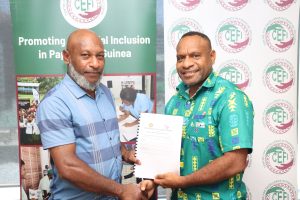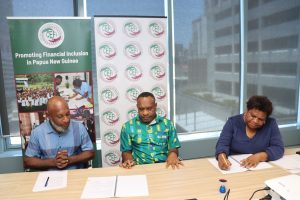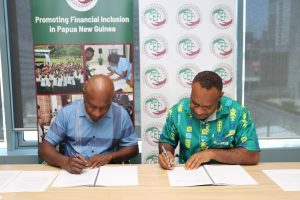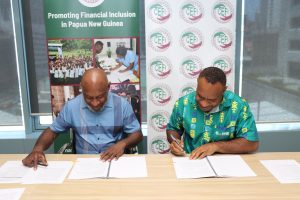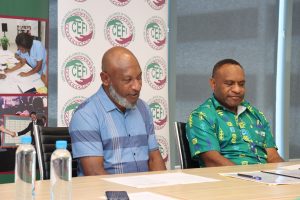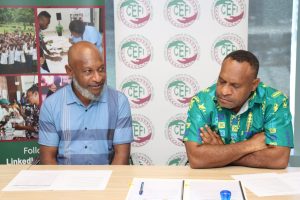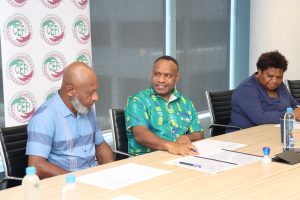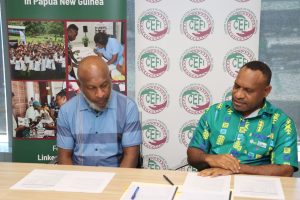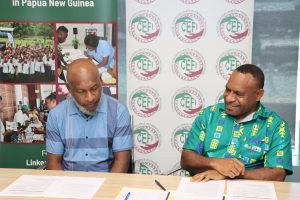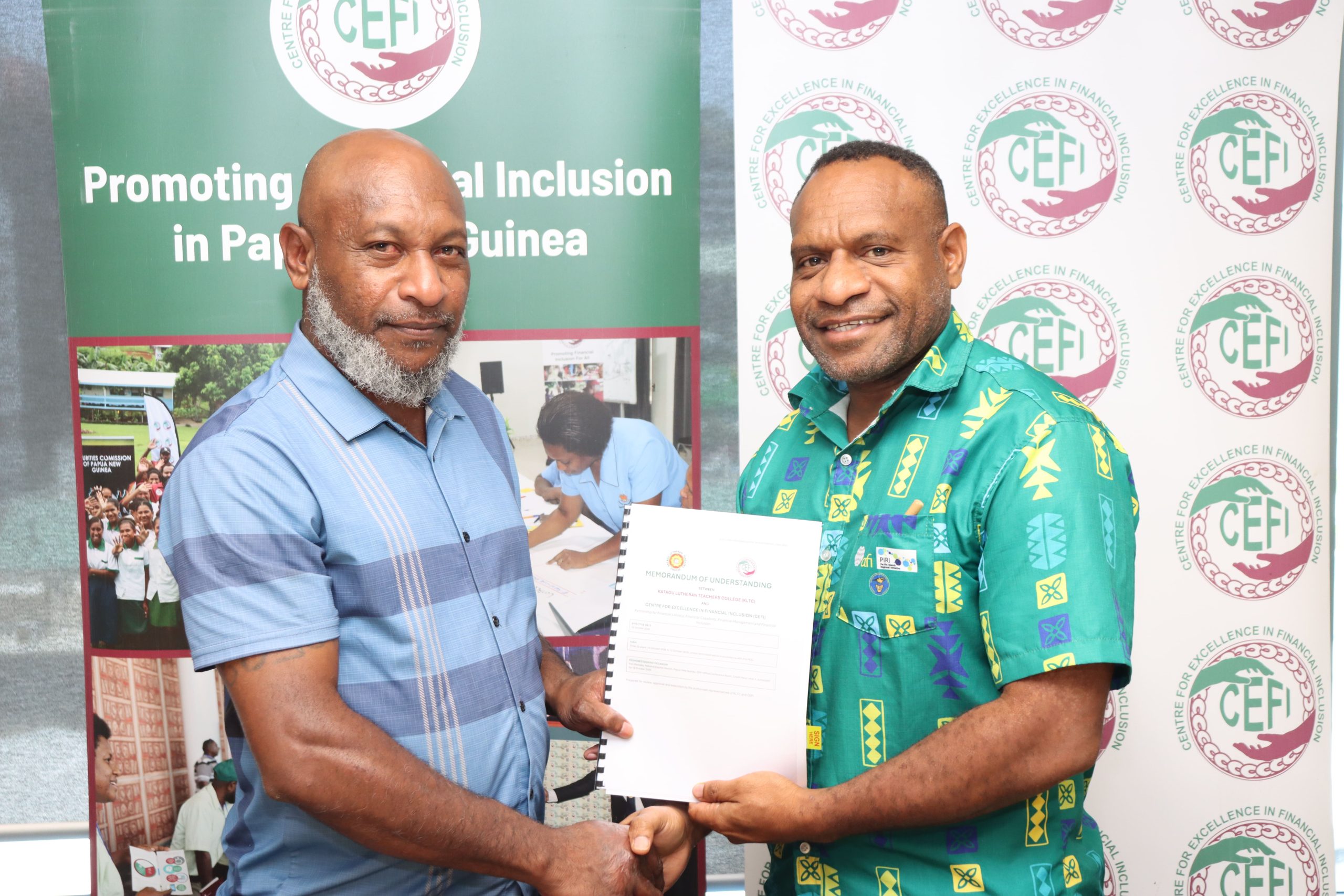
The Centre for Excellence in Financial Inclusion (CEFI) and Katagu Lutheran Teachers College (KLTC) have signed a Memorandum of Understanding (MoU) to strengthen financial literacy education among trainee teachers, school administrators and communities across Papua New Guinea.
The agreement was signed at the CEFI Office in Port Moresby on 16 October 2026, establishing a cooperative framework to develop financial literacy programmes, build teaching capacity and promote responsible financial management.
Located in Lower Benna Rural Local Level Government, Uggai-Bena District, Eastern Highlands Province, KLTC will serve as an important channel for extending financial education to future teachers and surrounding communities.
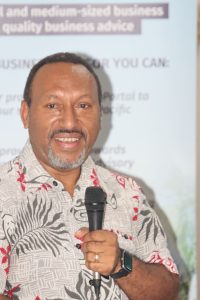
CEFI Acting Executive Director, Mr Peter Samuel, emphasised the influential role teachers play in shaping children’s attitudes, behaviour and understanding of financial responsibility.
“Teachers are key role models for our children at the initial stage where their cognitive development starts,” Mr Samuel said.
He explained that equipping trainee teachers with practical financial knowledge would enable them to introduce essential money management concepts, including savings, budgeting and distinguishing between needs and wants, to students from an early age.
Mr Samuel highlighted CEFI’s ongoing collaboration with the Department of Education to integrate financial education into the national school curriculum.
He said financial education modules had been developed and were undergoing further review and consultation with teachers to ensure their suitability across different grade levels.
The curriculum initiative is expected to progress towards a pilot rollout in schools in 2027, with teacher training institutions playing an important role in preparing educators for implementation.
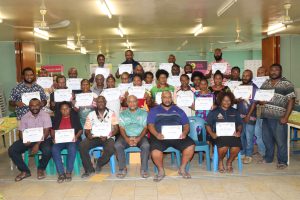
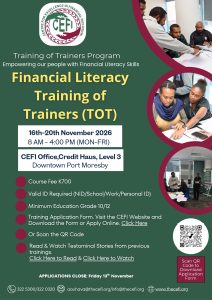
Under the MoU, CEFI intends to facilitate Financial Literacy Training of Trainers programmes for KLTC lecturers and teachers, enabling them to transfer financial knowledge and practical skills to trainee teachers before they enter classrooms.
However, Mr Samuel stressed that meaningful outcomes would depend on translating the agreement into practical activities supported by proper planning, resources and trained personnel.
“Signing is another thing, of course, but to implement it is another challenge,” he said.
He reaffirmed CEFI’s commitment to working with KLTC to ensure financial education reaches schools and communities through trained educators.
“One can do things on its own, but they may be limited. But together as a team, I think we can make a big difference in the country,” Mr Samuel said.
Meanwhile, KLTC Board Chairman, Reverend Patmos Willie, welcomed the partnership, describing it as an important opportunity to strengthen teacher education and improve financial management practices within schools.
“What CEFI is doing is setting and building the next generation of public leaders who must be financially competent,” Reverend Willie said.
He emphasised that teacher training institutions must prepare graduates not only for classroom instruction but also for administrative responsibilities, including managing school resources and supporting effective financial decision-making.
“Let’s produce teachers who are not just teachers, but administrators. They must also have financial knowledge and capacity so that they can empower their board in the schools to begin to understand,” he said.
Reverend Willie acknowledged CEFI’s work in developing the Financial Education Curriculum and expressed KLTC’s readiness to participate in its proposed implementation.
“We are ready to trial out this curriculum if CEFI chooses what time frame to implement. We are ready to partner with CEFI to do that,” he said.
He identified budgeting, savings, responsible borrowing, digital financial safety and financial management as important areas where teachers and school administrators could benefit from additional training.
Beyond the college, KLTC intends to collaborate with CEFI to extend financial literacy programmes to school boards, serving teachers and surrounding communities.
Reverend Willie also outlined plans to organise financial literacy training for teachers working in Lutheran agency schools throughout Eastern Highlands Province, potentially during school semester breaks in 2027.
The proposed activities would be coordinated with provincial education authorities and participating schools, subject to further planning and agreement.
Both organisations recognised that effective implementation would require continued coordination, resource mobilisation and a practical work plan to guide training delivery and community outreach.
The partnership provides a foundation for developing financially capable educators who can strengthen money management practices within schools, households and communities while supporting broader financial inclusion objectives across Papua New Guinea.
Ends.
Images: