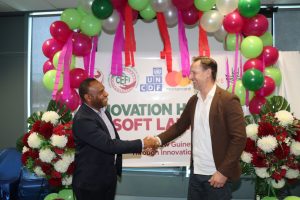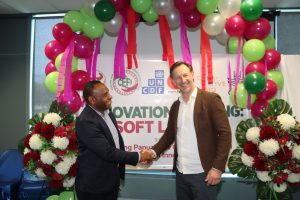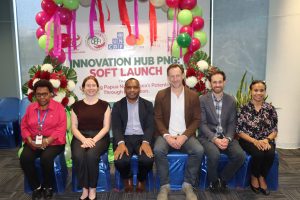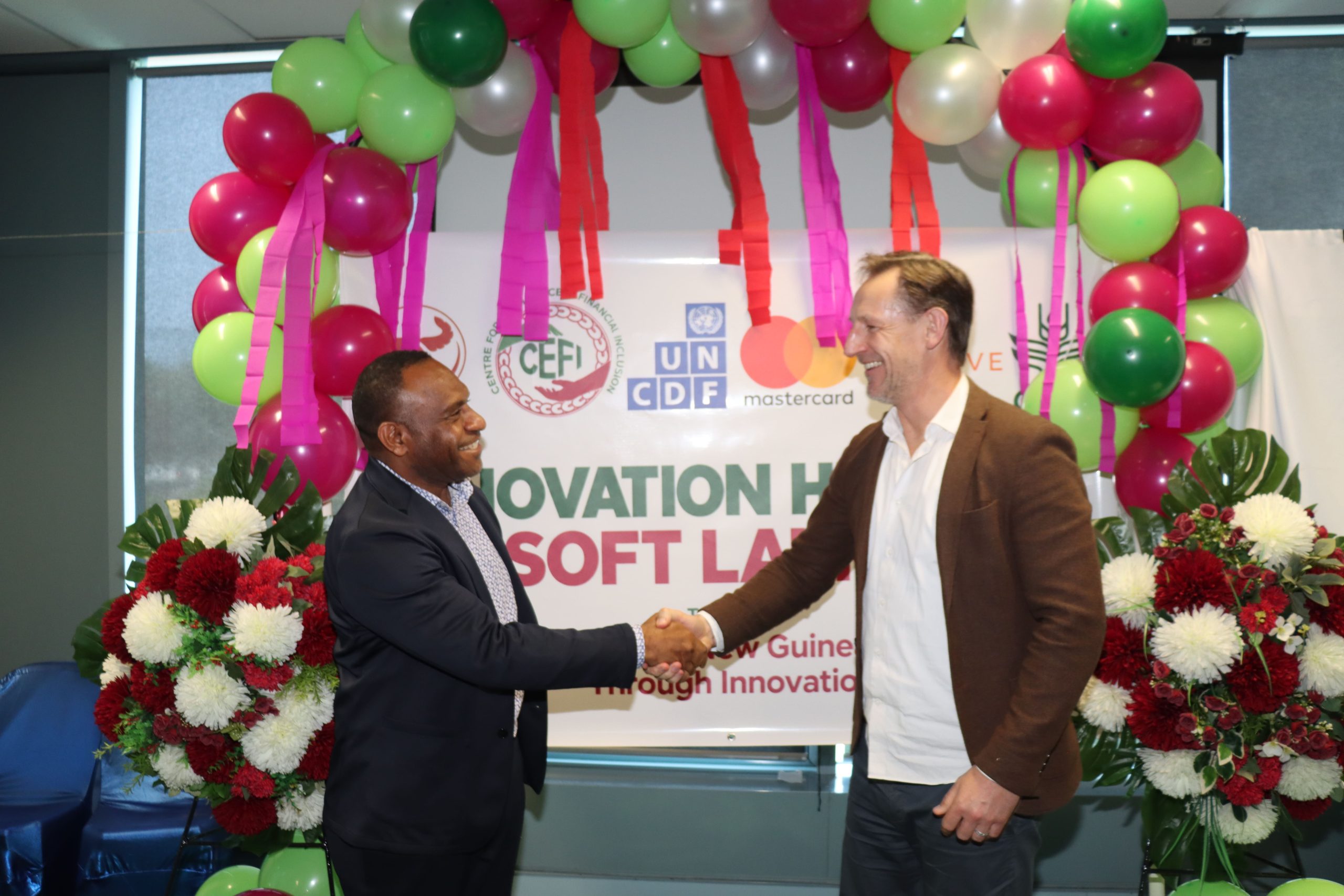
The Centre for Excellence in Financial Inclusion (CEFI) marked the soft launch of PNG Innovation Centre on Wednesday, 21 October 2026, in Port Moresby, introducing a collaborative platform to support entrepreneurship, financial technology and digital financial inclusion across Papua New Guinea.
The Hub aims to support FinTech and AgriTech businesses, with a plan for the first 12 months focusing on establishing an advisory group, mapping the ecosystem, bringing ecosystem stakeholders together, supporting start-ups, and developing pathways to capital, with a focus on MSMEs, women’s participation and youth.
Both organisations (CEFI & Creative HQ) stressed the importance of complementing existing programmes, strengthening local expertise and building partnerships capable of sustaining the Centre beyond its initial development.
CEFI acknowledged support from BPNG, UNCDF, Creative HQ, Mastercard, NICTA and other stakeholders.
The soft launch marks the beginning of further work to establish PNG Innovation Centre and translate locally developed ideas into practical solutions that expand financial access and economic opportunities.
The launch followed a series of stakeholder consultation meetings during the preceding week, bringing together representatives from the financial sector, regulatory agencies, information and communications technology, development organisations, agriculture, trade and micro, small and medium enterprises (MSMEs).
Participating organisations included the Bank of Papua New Guinea (BPNG), National Information and Communications Technology Authority (NICTA), Department of Information and Communications Technology (DICT), United Nations Capital Development Fund (UNCDF), SME Corporation, Department of Agriculture and Livestock, and MiBank.
The consultations helped identify sector priorities, opportunities for cooperation and practical considerations to inform the Hub’s development.
The visiting Creative HQ delegation was led by General Manager Government Innovation, Mr Jonny Haddon, and included Chief Growth Officer, Dr Collin Kennedy, and Senior Innovation Specialist, Ms Claudia Rees.
The team was in Port Moresby to work with CEFI on developing PNG Innovation Centre, contributing technical expertise and experience from similar programmes in the Pacific.
Speaking at the launch, CEFI’s Acting Executive Director, Mr Peter Samuel, explained that the initiative grew from CEFI’s experience implementing financial inclusion programmes nationwide.
Geographical isolation, technological limitations and service delivery challenges continued to restrict access to financial services, creating a need for solutions designed around local conditions.
“The PNG Innovation Centre will not operate as a bank, investment fund or regulatory authority. Instead, it will provide a collaborative platform where entrepreneurs can develop practical solutions with support from technical experts, mentors and partners,” Mr Samuel said.
He explained that discussions with industry stakeholders led to a FinTech Incubation Centre proposal in 2024, subsequently shaped through engagement with UNCDF, Creative HQ and other partners.
“The initiative supports the National Financial Inclusion Strategy 2023–2027, particularly Strategic Objective Three, which promotes efficient digital financial infrastructure and responsible financial innovation,” he said.
Mr Samuel identified financial technology, digital financial inclusion and responsible digital innovation as central priorities.
He said although financial technology would provide the initial focus, the Hub could also support solutions in agriculture, MSME development, digital payments, digital literacy and digital identification.
“Solutions must respond to Papua New Guinea’s unique geographical, cultural and economic circumstances rather than simply adopting approaches developed elsewhere,” he said.
According to Mr. Samuel, the PNG Innovation Centre would also help prepare eligible entrepreneurs to engage with BPNG’s existing regulatory sandbox, where appropriate financial solutions could be tested within an established regulatory framework.
Initially operating from CEFI’s existing office, the Hub would follow a phased approach while partners establish governance structures, operational arrangements, mentorship activities and sustainable funding mechanisms.
Demand and programme effectiveness would inform decisions about a dedicated facility.
Creative HQ’s Mr Haddon reaffirmed his organisation’s commitment to working alongside CEFI and other stakeholders to build a sustainable, locally driven platform.
“The Centre must reflect Papua New Guinea’s economic priorities, business environment and entrepreneurial needs rather than replicate models developed elsewhere,” Mr Haddon said.
Drawing on experience in Fiji, he highlighted the importance of institutional leadership, collaboration and technical support in helping emerging businesses move from ideas to viable products and services.
Mr Haddon outlined five proposed priorities for the first year: leadership, ecosystem mapping and connections, collaborative events, business growth support and access to capital.
These would include an advisory group, stronger links between existing organisations and opportunities for entrepreneurs to access expertise and financing.
He identified financial technology and agriculture as promising initial sectors, with opportunities to support MSMEs, employment and greater participation by women and young entrepreneurs.
“Coordinated technical assistance, mentorship, business development support and regulatory engagement can transform a promising idea into a viable commercial opportunity,” Mr Haddon said.
Ends