+675 322 5300

Call to speak to our team

info@thecefi.org

Contact our team via email

Mon - Fri: 8:00 - 4:30

We maintain normal hours

Categories
News Article

CEFI and ITI Sign MOU to Advance Financial Literacy and Skills Development in PNG

The Centre for Excellence in Financial Inclusion (CEFI) and the International Training Institute (ITI) have formalised a strategic partnership aimed at strengthening financial literacy, academic collaboration, and workforce readiness for Papua New Guinea’s next generation of professionals.

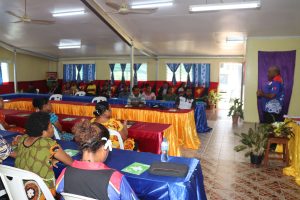
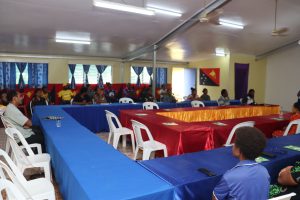
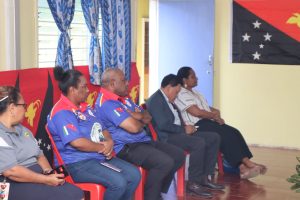
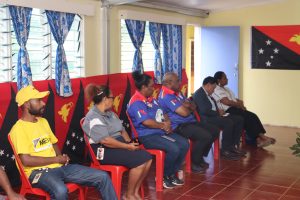
The signing of the Memorandum of Understanding (MoU) took place on Thursday, 27th November 2025, at the ITI Campus, signalling a significant step towards enhancing financial education and improving access to skills development for young Papua New Guineans.

The MoU outlines key areas of cooperation, including financial literacy and education capacity buildingand educational capacity-building for students and staff, mutual learning and exchange, curriculum development, internship placements, and joint participation in seminars, conferences, and career programmes.

Through this partnership, both institutions aim to nurture a younger generationworkforce equipped with essential financial knowledge, entrepreneurial skills, and practical experience needed to navigate PNG’s evolving economic landscape.

Speaking at the ceremony, CEFI’s Acting Executive Director, Mr Peter Samuel, highlighted the importance of the collaboration in expanding financial inclusion across the country. “CEFI was created through the Micro Expansion Project with ADB and other donors who recognised the need for access to finance, especially for those at the base of the pyramid,” he said.

He emphasised ITI’s unique role in providing accessible education, adding, “ITI provides a pathway that no other institution in the country provides. It gives opportunities to those who have been pushed out by the system, helping them build their lives and careers.”

Mr Samuel also shared his positive experience with ITI graduates, describing them as “very productive and efficient,” and stressed the importance of practical implementation of the partnership. “Signing is one thing, but operationalising it and adding value to students’ lives is what I would really like to see,” he remarked. He expressed confidence in future collaborations, stating, “We’re looking forward to more collaborations.”

ITI Chairman and Co-Founder, Mr Senthil Kumaran Sentheyval, reaffirmed ITI’s commitment to strengthening financial literacy for students and acknowledged CEFI’s expertise.

“Finance is the most important thing and the students must be trained on financial literacy.”

Mr Sentheyval outlined opportunities for collaboration, especially for students pursuing Tourism, SME and other business-related studies.

“We are trying to get some of them (students) to start their own business with financial literacy and education on now they can manage their money and how they can look after it,” he explained.

He described the partnership with CEFI as a “mutual benefit”, adding, “We (ITI) are here to complement their (CEFI) service and we know they’re doing a very great job.”

He also acknowledged CEFI’s sponsorship of ITI’s 2026 AI Summit.

Both organisations have expressed their readiness to commence joint planning immediately as they move towards operationalising the MoU and delivering meaningful, long-term impact for PNG’s education and economic sectors.


Ends.


About CEFI

CEFI was established under the Association Incorporation Act and officially launched on the 24th of April 2013. CEFI was endorsed by PNG’s National Executive Council (NEC) as the industry apex organization for coordinating, advocating and moniotoring all financial inclusion activities in PNG.

CEFI’s vision, mission and values focus on financial inclusion and literacy, poverty elimination and the promotion of vibrant financial institutional operation in Papua New Guinea.

Visit our website – www.thecefi.org

Media Contact:

Mr. Leslie Omaro

Communication Officer

Phone: 7464 5678

Email: lomaro@thecefi.org
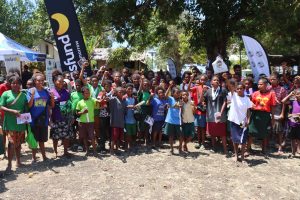
 

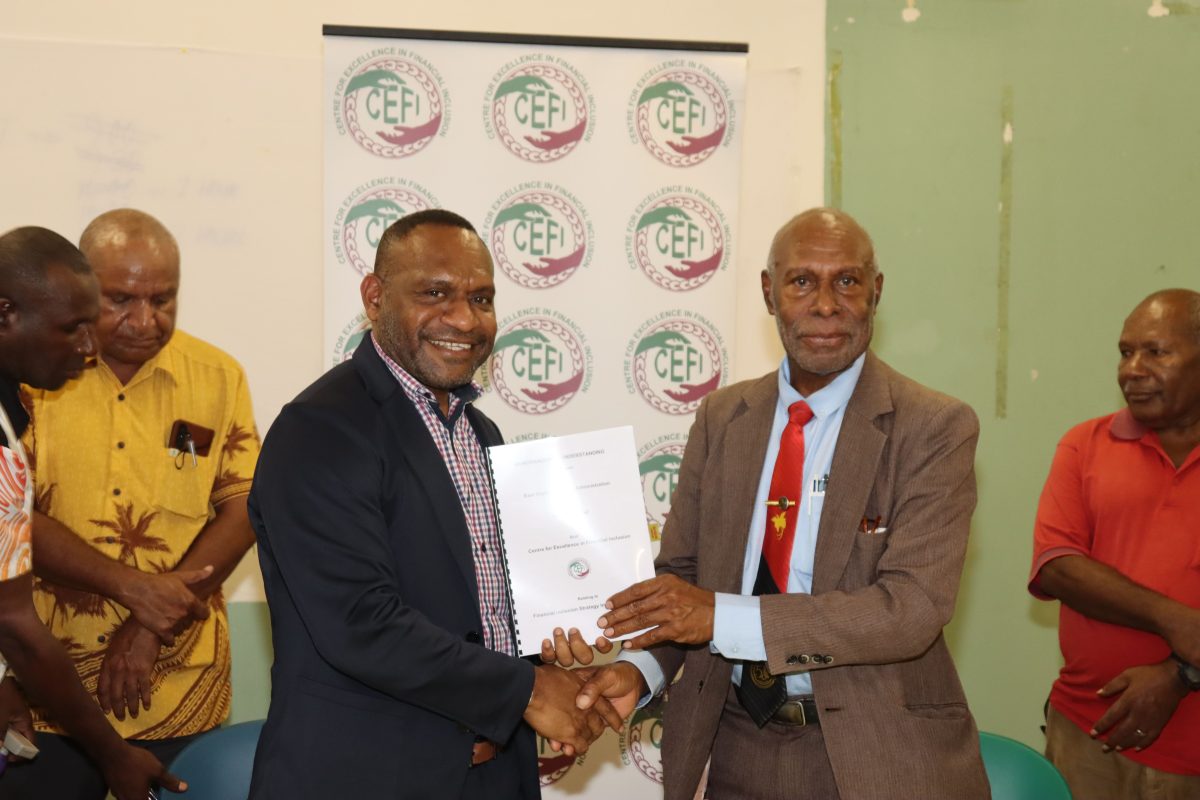
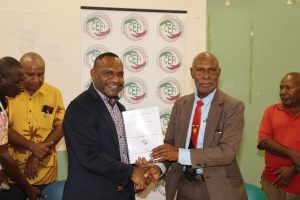
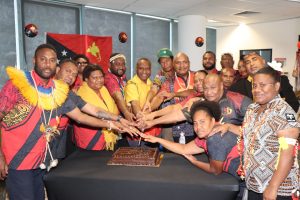
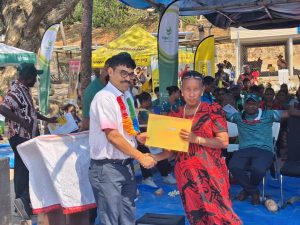
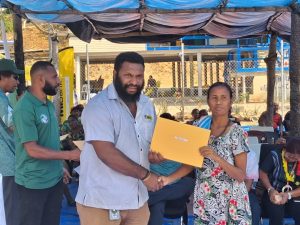
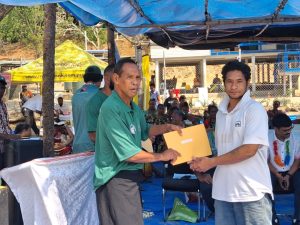
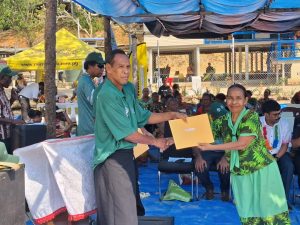
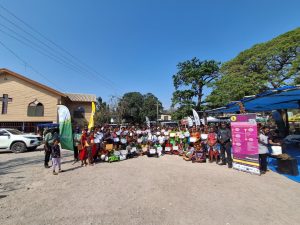
Caption:  CEFI Acting Executive Director Mr. Peter Samuel (right) and ITI Chairman and Co-Founder, Mr Senthil Kumaran Sentheyval sign the MoU Documents.

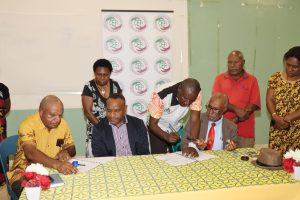
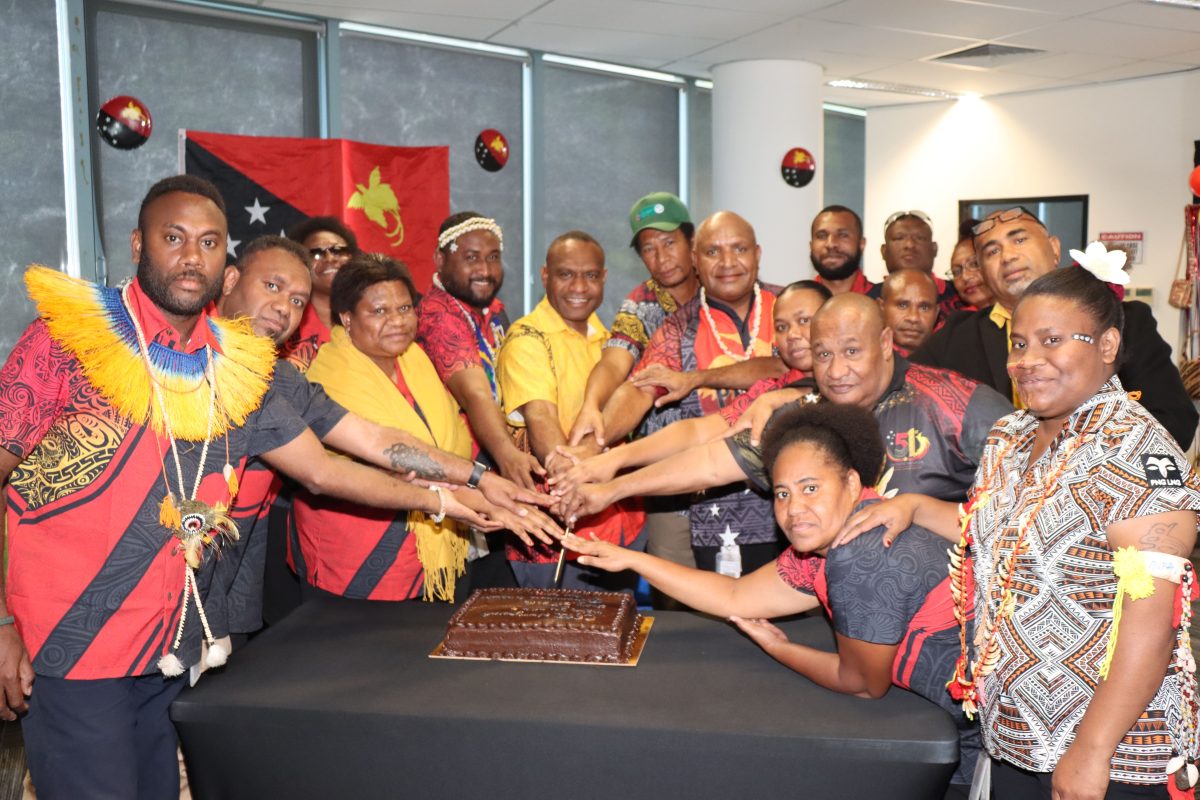
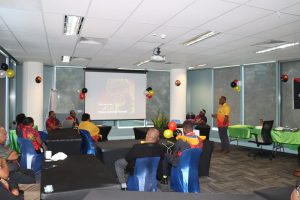
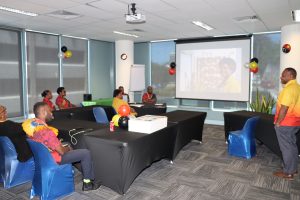
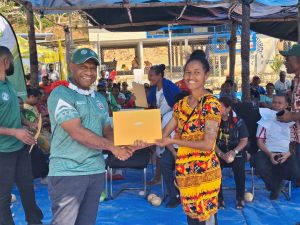
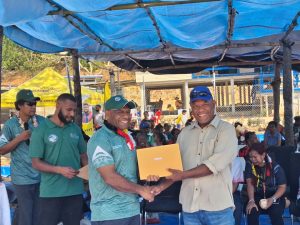
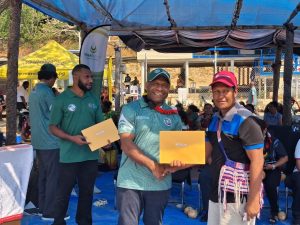
Image Caption:  Below Photos from the MoU Signing.


Categories
News Article

From Strangers to Change Makers: CEFI Unveils New Trainers in Financial Literacy

They arrived as strangers but left as advocates united by a shared desire to change the financial habits of their families, workplaces, and communities. Participants agreed that the week long experience not only strengthened their skills but reshaped their outlook on money.

This sentiment echoed throughout the closing ceremony of CEFI’s Financial Literacy Trainer of Trainers (ToT) Program, held from 3rd  to the 7th of November 2025 at the CEFI Office in Port Moresby.

In his address, CEFI’s Acting Executive Director, Mr. Peter Samuel, said the group’s participation reflected a shift in mindset an essential foundation for addressing Papua New Guinea’s deep-rooted spending culture.

Mr. Samuel noted that many Papua New Guineans continue to struggle with saving because generational habits and communal obligations often outweigh long term financial goals.

He emphasized that financial empowerment requires intentional planning, particularly in an environment where fees, rising costs, and financial pressures place many households at risk.

Mr. Samuel also commended the dedication of the 35 newly certified trainers (17 males and 18 females) from eight provinces adding that CEFI cannot do the training alone.

He acknowledged organizations and individuals who funded themselves to attend the training, saying their commitment demonstrates “a willingness to change not just society, but themselves”.

Guest speaker Dr. Nancy Irwin, CEO of Nuterra Inc., described the training as a testament to the idea that “skills are lasting empowerment”. She encouraged participants to remain connected as a network of change agents, reminding them that “power is network” and urging them to serve as positive influencers in their communities.

Male participant Mr. Ben Bande thanked CEFI for the opportunity, explaining that the program strengthened their understanding of savings, budgeting, and cash-flow planning—knowledge they will carry forward as better financial managers and trainers.

Participants represented diverse professional backgrounds and travelled from across the country, including:

  • Port Moresby (NCD) – 25
  • New Ireland (Kavieng) – 4
  • Morobe (Lae) – 2
  • Madang – 1
  • Eastern Highlands (Goroka) – 1
  • West Sepik (Vanimo) – 1
  • Gulf (Kerema) – 1
  • Hela (Tari) – 1

This second batch under the Expression of Interest arrangement marks another important milestone in expanding CEFI’s nationwide network of Financial Literacy Trainers.


Ends.


About CEFI

CEFI was established under the Association Incorporation Act and officially launched on the 24th of April 2013. CEFI was endorsed by PNG’s National Executive Council (NEC) as the industry apex organization for coordinating, advocating and moniotoring all financial inclusion activities in PNG.

CEFI’s vision, mission and values focus on financial inclusion and literacy , poverty elimination and the promotion of vibrant financial institutional operation in Papua New Guinea.

Visit our website – www.thecefi.org

Media Contact:

Mr. Leslie Omaro

Communication Officer

Phone: 7464 5678

Email: lomaro@thecefi.org
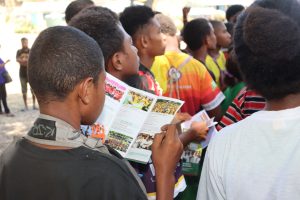
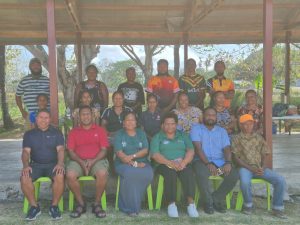
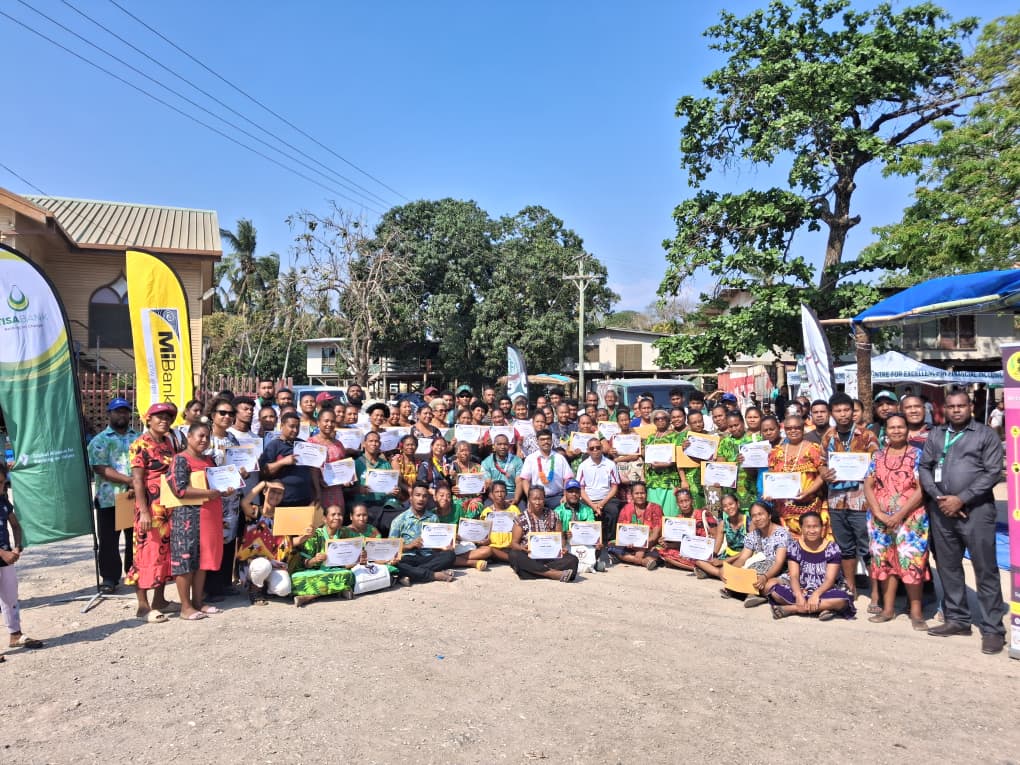
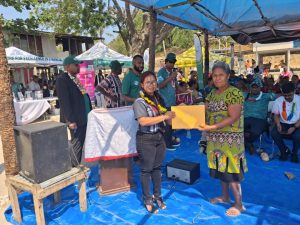
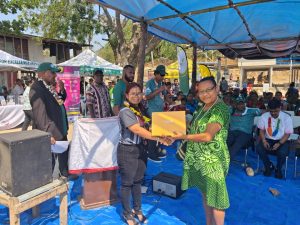
Image Caption: Photos from the week long TOT Training and Certificate Presentation.


Categories
Media Releases

Four-Day BPNG-AFI Programme Charts Path for Climate Resilient and Inclusive Financial Systems

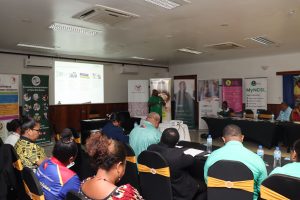
The Bank of Papua New Guinea (BPNG) co-hosted with Alliance for Financial Inclusion (AFI) a four-day Joint Learning Program on Inclusive Green Finance Policy Implementation, uniting policymakers and Central Bankers around the world to discuss inclusive green finance and climate resilience. The program was held in Port Moresby from Tuesday 28-31 October.

Discussions highlighted Papua New Guinea’s climate priorities, the development of the national Inclusive Green Finance Policy (IGFP), and the establishment of the Green Finance Centre

The sessions explored leveraging gender-responsive data and Digital Financial Services (DFS) to design inclusive policies. Participants examined stakeholder collaboration, biodiversity conservation, and emerging financing options such as green bonds and blended finance. The program concluded with action planning to strengthen IGF policy implementation and promote sustainable financial inclusion.

Expert insights were shared by AFI member institutions, including Nepal Rastra Bank, National Bank of Rwanda, Bangladesh Bank, State Bank of Pakistan, and the Central Bank of Seychelles. Contributions also came from local and international partners such as AFD, UNDP, UNCDF, IFC, Green Climate Fund, CCDA, and various financial institutions in PNG.

BPNG Deputy Governor Jeffery Yabom stated in his opening remarks that climate change was not a distant risk but a lived reality for everyone in the Pacific. He noted that women and vulnerable groups were often the most affected, facing barriers in accessing finance when they needed it most. He further added that the lessons from the programme would extend beyond Papua New Guinea, benefiting regulators across the Pacific and other developing economies facing similar challenges.

AFI’s Director of Strategy, Member Engagement and Evaluation, Aban Haq, commended the BPNG for its strong partnership and leadership in advancing inclusive green finance (IGF) across the AFI network.

Ms Haq highlighted that the Joint Learning Program addressed the urgent need for financial inclusion responses to climate change, particularly for vulnerable groups such as women, smallholder farmers, and rural communities. She emphasized that digital financial services play a transformative role in promoting resilience and ensuring climate adaptation efforts reach those most affected.

Assistant Governor for Financial System Development and Innovation at the BPNG, Mr George Awap, commended participants for their dedication during the four-day BPNG–AFI Joint Learning Programme on Inclusive Green Finance Policy Implementation, which concluded on Friday, 31 October.

Mr Awap said the programme had been more than a technical workshop, describing it as a convergence of shared purpose aimed at exploring how inclusive green finance could act both as a shield against the escalating threats of climate change and as a catalyst for sustainable, inclusive economic growth. He stressed that climate resilience was not merely an environmental issue but an economic and social imperative, particularly for vulnerable groups such as women, youth and rural communities.

He highlighted PNG’s progress, including the launch of the Green Finance Policy in 2023, the establishment of the Green Finance Centre in 2024, and partnerships with international organizations to align financial policy with climate goals. These initiatives, he noted, had already mobilized over two billion kina in climate-related finance.

Mr Awap emphasized the importance of collaboration, innovation and capacity building to ensure that financial inclusion reached those most in need, reaffirming BPNG’s commitment to building a resilient, low-carbon and inclusive financial ecosystem.

AFI Regional Manager for the Pacific, Mereseni Tuivuniwai, commended the BPNG for successfully hosting the four-day program.

She highlighted that the training was timely and enriched participants’ understanding of integrating environmental and climate considerations into financial inclusion frameworks.

She emphasised the importance of developing locally relevant green taxonomies, leveraging technology and data for resilient systems, and ensuring gender-responsive financial policies.

Mrs Tuivuniwai further stressed that collaboration among regulators, government, private sector, and development partners was key to building inclusive and climate-resilient financial ecosystems.

She urged participants to apply their learnings within their institutions and translate policy commitments into practical actions, reaffirming AFI’s continued support towards implementation and peer learning initiatives.

Ends.

Images:


Categories
News Article

Cocoa Farmers in Inland Baining Gain Vital Financial Skills Through Training

A four-day Financial Literacy Retail Training was conducted for smallholder farmers from Inland Baining, Gazelle District, East New Britain Province, from 1st to 4th October 2025. The training was facilitated by the Centre for Excellence in Financial Inclusion (CEFI) in partnership with the United Nations Development Programme (UNDP) and the Conservation and Environment Protection Authority (CEPA) under the GEF7-FOLUR Project.

The event, held at Rapopo Plantation Resort in Kokopo, brought together 45 participants  23 men and 22 women  involved in cocoa and fresh produce farming. The farmers were divided into two batches, with Batch One trained from 1st–2nd October and Batch Two from 3rd–4th October.

The sessions covered key topics such as money management, savings plans, household budgeting, tracking income and expenses, cash flow management for seasonal crops, and accessing financial services. Representatives from financial institutions including NCSL, BSP, Kadaporoman Microfinance Limited, and East New Britain Savings and Loans Society also attended to share information on their products and services.

According to CEFI, the training aimed to equip farmers with essential financial skills to better manage income, reduce debt, and build savings to strengthen their economic resilience.

The initiative forms part of broader efforts to advance financial inclusion, promote sustainable livelihoods, and support the PNG Vision 2050.

It further contributes to the FOLUR Impact Programme’s goal of fostering sustainable and inclusive rural economic growth across New Britain Island.

Ends.

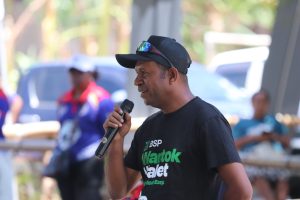
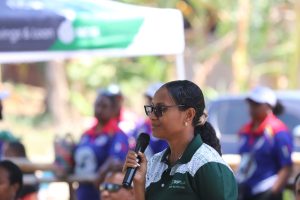
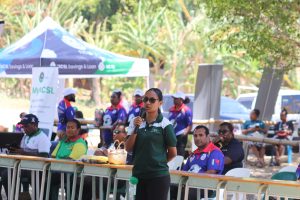
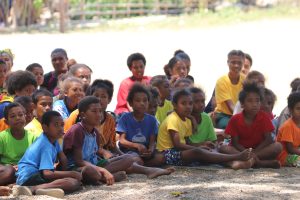
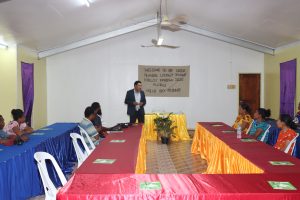
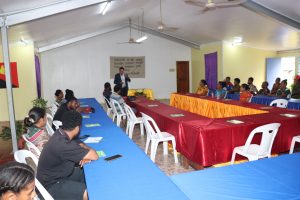
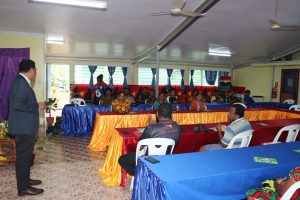
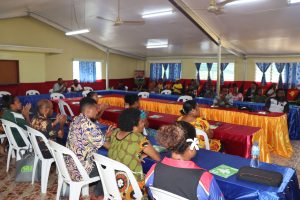
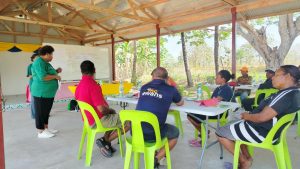
Image Caption: Participants from Inland Baining, Gazelle District, take part in group discussions and practical exercises during the four-day Financial Literacy Retail Training held at Rapopo Plantation Resort in Kokopo. The training, facilitated by the Centre for Excellence in Financial Inclusion (CEFI) in partnership with UNDP and CEPA under the GEF7-FOLUR Project, equipped cocoa and fresh produce farmers with vital financial management skills to strengthen their livelihoods.


Categories
News Article

Community Officers in West New Britain Equipped Through Financial Literacy Training

The Centre for Excellence in Financial Inclusion (CEFI), in collaboration with the Department of Community Development and Religion (DFCDR) and the West New Britain Provincial Government, successfully conducted a five-day Training of Trainers (ToT) program from 13th to 17th October 2025 at the Kadeemah Motel in West New Britain.

The program brought together 27 participants, including 21 men and 6 women, representing Community Development Officers and officials from the provincial and district administrations of Nakanai and Kandrian–Gloucester. The training aimed to enhance participants’ facilitation and training skills while deepening their knowledge of key financial literacy topics such as savings, budgeting, and cash flow management.

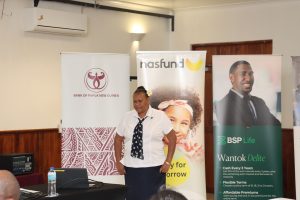
During the sessions, representatives from the Nasfund Contributors Savings and Loan Society (NCSL) presented information on various financial products and services. Several participants reportedly took the opportunity to open savings accounts with NCSL, reflecting an immediate positive outcome of the training.

The ToT program concluded on Friday, 17th October 2025, with a certificate presentation ceremony that coincided with the official opening of the District Community Development Centre (DCDC) in Biala.

This initiative was part of ongoing efforts to strengthen community development and promote financial inclusion throughout West New Britain Province. By empowering local officers with practical financial literacy skills, the program aimed to ensure that communities across the province would benefit from improved financial awareness and inclusion initiatives.

Ends.

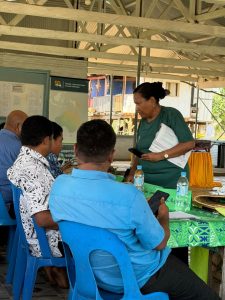
Caption:  Community Officers from West New Britain attended a Training of Trainers (ToT) session, where NCSL representatives also shared insights on financial products and services. The training strengthened participants’ facilitation skills and deepened their understanding of key financial literacy topics, including savings, budgeting, and cash flow management.

Categories
News Article

Financial Inclusion Drive Brings Banking Access to Cocoa Farmers in Inland Baining

A week-long financial inclusion outreach held from 6th to 11th October 2025 saw cocoa farmers in the Inland Baining area of East New Britain gain access to formal banking services for the first time.

The initiative, organized by the Centre for Excellence in Financial Inclusion (CEFI) in partnership with the United Nations Development Programme (UNDP) under the FOLUR Project, took place across six villages in the Inland Baining Local Level Government (LLG) of the Gazelle District.

According to organizers, the account-opening programme was conducted in Manapki, Bruit, Rangulit, Kasaska, Malasaet, and Alakasam villages, where teams from several financial institutions provided on-site services to local communities.

Participating institutions included East New Britain Savings and Loan Society (ENBSL), Kadaporoman Microfinance Limited, Nationwide Microbank, Nasfund Contributors Savings and Loan Society (NCSL), and BSP Financial Group Limited.

It was reported that between 20 and 30 new accounts were opened by each institution in every community, signaling strong local interest and growing trust in formal financial systems.

CEFI representatives said the outreach demonstrated the effectiveness of collaboration in promoting financial inclusion in remote areas. They explained that access to basic banking services would empower families, support small-scale cocoa farmers, and foster a culture of saving and financial management.

The programme was described as a key milestone in the ongoing efforts to strengthen rural livelihoods and ensure that economic opportunities reach all communities in East New Britain.

Ends.

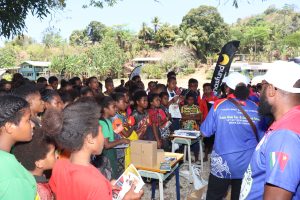
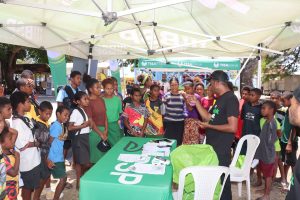
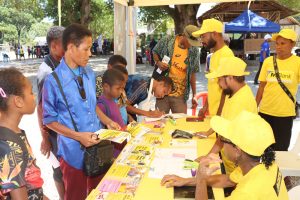
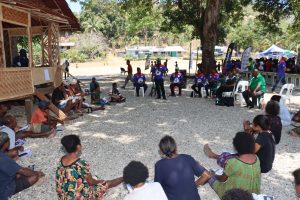
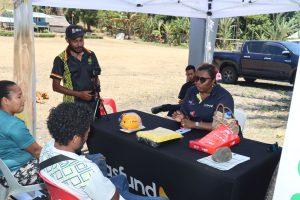
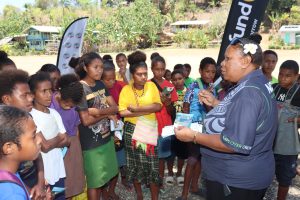
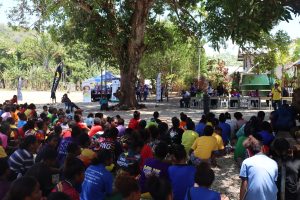
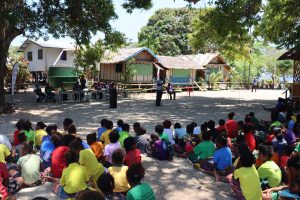
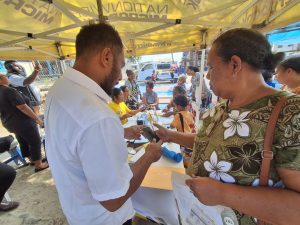
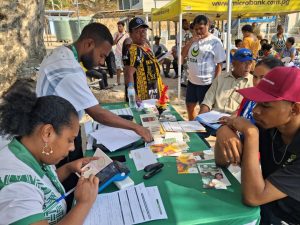
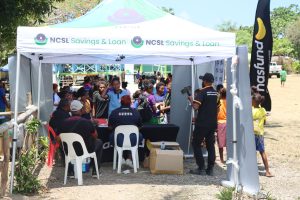
Caption: Images  showing representatives from financial institutions opening accounts for Cocoa farmers in Inland Baining in East New Britain Province.

Categories
Impact Stories

Q & A with Anne-Shirley Korave

Founded by Anne-Shirley Korave, QueenPads is a proud PNG social and green enterprise addressing menstrual challenges faced by women nationwide. With support from BLP, QueenPads has improved efficiency, boosted growth, and continues to promote sustainable menstrual health solutions.

Read Anne-Shirley’s full Q&A session with CEFI.

  1. Can you briefly state the nature of your business?

QueenPads is a locally owned social and green enterprise established in Port Moresby, Papua New Guinea, in 2018. Its goal is to address the silent menstrual challenges faced by thousands of women across the country. With a dedicated team of full-time staff and volunteers, QueenPads focuses on the production and distribution of eco-friendly, reusable menstrual products, as well as education and advocacy programmes.

  1. What was the state of your business prior to the assistance of the BLP Business Grant?

The business was incurring high operational costs. And since we need to engage professional  services, an additional cost, accounting , communication and tech, recently HR services, the subsidy came in very handy bearing half of the costs incurred for those services  at the initial stages.

  1. In what ways did the BLP Business Support Grant/Subsidy/Small Grant Facility/Concessional Loan assist your business to grow?

BLP’s Business Subsidy support helped reduce some of those initial high costs. And as a result, these outrsourced services enhanced the overall business operations.


  1. What are some of the positive outcomes following the assistance by BLP?

Not all professional business services are affordable for SMEs due to high service fees. For us, being able to access such services with the support of BLP was a significant achievement. Improved efficiency and enhanced business operations.

  1. After receiving the BLP Service (Business Support Grant, Small Grant Facility, Subsidy, Concessional Loan), do you still face challenges in your business operations?

Yes. Challenges in business operations are ongoing, particularly within a tough economy such as Papua New Guinea’s.

  1. How is your business helping/benefiting ordinary Papua New Guineans?

Our locally designed sanitary products are helping thousands of women in both rural and urban areas to save money and manage their menstrual health with confidence and dignity, while also protecting the environment from waste pollution. In addition, our education and advocacy programmes promote women’s health and well-being.

  1. How do you see your business in the next five (5) years?

We aim to produce more eco-friendly and cost-effective sanitary product solutions, reaching thousands of women who need menstrual care in Papua New Guinea and the wider region. Together, we are working towards a #PeriodFriendlyPNG and a #PeriodFriendlyRegion. At QueenPads, we envision a healthy and sustainable society for years to come.


Ends.

Categories
Impact Stories

QueenPads: Empowering Women Through Sustainable Menstrual Solutions

Founded in 2018 by Anne-Shirley Korave, QueenPads is a proudly Papua New Guinean social and green enterprise based in Port Moresby.

The organization was established to address the silent but pressing menstrual challenges faced by thousands of women across the country. With a dedicated team of staff and volunteers, QueenPads focuses on producing and distributing eco-friendly, reusable menstrual products, alongside delivering education and advocacy programmes on menstrual health.

Before receiving assistance from the Business Link Pacific (BLP) Business Grant, QueenPads faced high operational costs, particularly for professional services such as accounting, communication, technology, and human resources. The BLP subsidy helped ease this financial burden by covering half of these expenses during the early stages of growth.

Anne-Shirley explained that BLP’s support significantly enhanced operational efficiency by enabling access to vital professional services that many small and medium enterprises (SMEs) in Papua New Guinea find unaffordable. As a result, QueenPads strengthened its management and overall business performance.

Despite ongoing challenges in a difficult economic climate, QueenPads continues to make a powerful impact. Its locally made sanitary products empower women in both rural and urban communities to manage their menstrual health confidently and sustainably.

Looking ahead, Anne-Shirley envisions expanding QueenPads’ reach across Papua New Guinea and the wider Pacific, promoting a #PeriodFriendlyPNG and a #PeriodFriendlyRegion, while building a healthier and more sustainable future for all women.

Ends.

Categories
News Article

Young Mind Savings Campaign Heads to Kerema District

Kerema District in Gulf Province will host the Young Mind Savings Campaign (YMSC) this week from Wednesday 08th to 10th October, following successful rollouts in East New Britain, Milne Bay and West New Britain provinces.

The YMSC is a key initiative under a Memorandum of Understanding (MoU) signed between the Centre for Excellence in Financial Inclusion (CEFI) and the Kerema District Development Authority (DDA) on 06th November 2023.

The Kerema campaign is supported by the Bank of Papua New Guinea, the Securities Commission of PNG, and several financial institutions including MiBank, Women’s Micro Bank, Bank South Pacific, Nasfund, Credit Corporation Bank, and Nambawan Super.

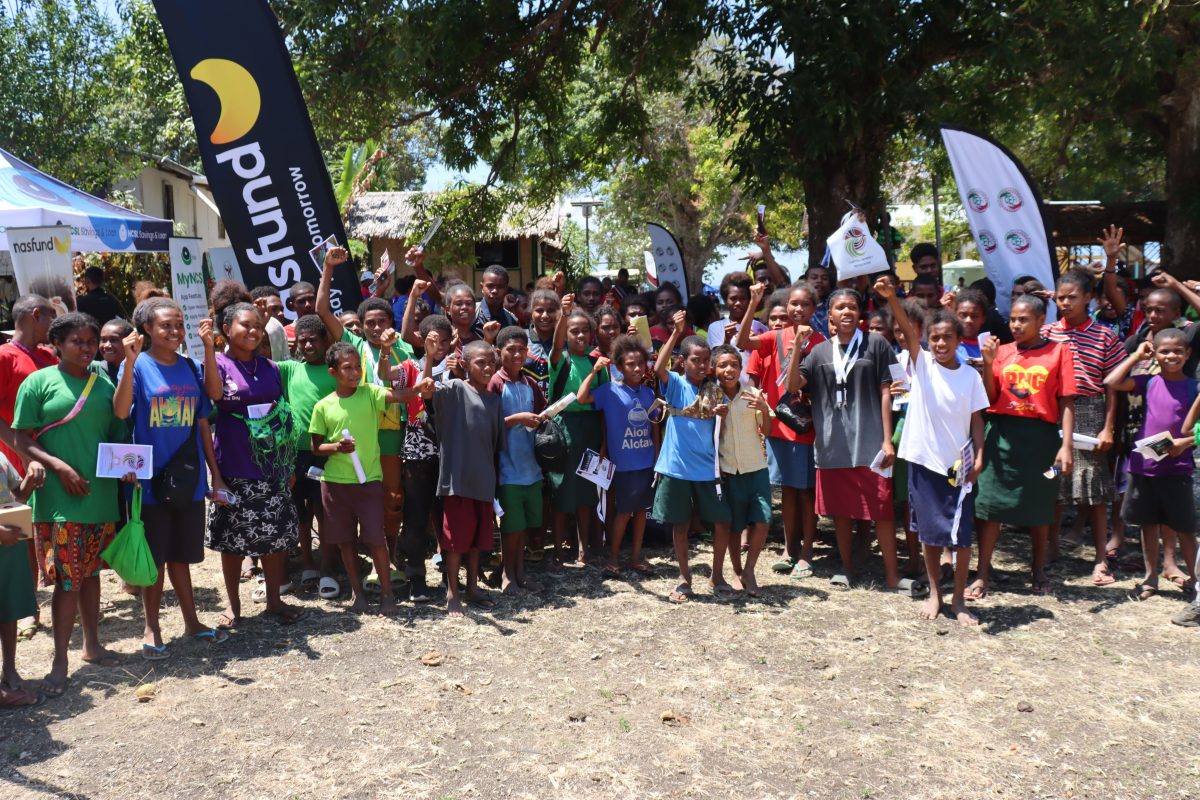
The three-day event aims to engage students from selected primary and secondary schools to promote a culture of saving and financial responsibility. Activities include awareness sessions, question-and-answer forums, and on-site bank account openings.

Participating schools include Sikalu, Ilakaraeta, Karea, and Epo Uriri Primary Schools, as well as Malalaua and Kerema Coronation Secondary Schools.

The initiative supports the National Financial Inclusion Strategy (NFIS) 2023–2027, which targets the opening of an additional two million bank accounts nationwide.

Previous campaigns have made a strong impact, with more than 600 student savings accounts opened across the three participating province, Milne Bay,West New Britain, and East New Britain.


Ends.

Image 1:
CEFI’s Special Projects Coordinator, Mr Tobias Toumne, briefs Sikalu Primary School Headmistress, Mrs Xavier, during a visit to the school on Monday, 6th October. The briefing focused on the upcoming Young Mind Savings Campaign to be implemented in the Kerema District. Observing the discussion are Security Commission PNG Senior Officer, Mr Max Siwi, and Rev. Pastor Tuta, Chairman of the Kerema District Steering Committee.

Image 2:
Students make their way out for recess at Sikalu Primary School. Sikalu Primary is among six schools in the Kerema District participating in the Young Mind Savings Campaign.

Image 3:
Students in class at Sikalu Primary School, one of six schools in the Kerema District participating in the Young Mind Savings Campaign.

Image 4:
The school signage board at Sikalu Primary.

Image 5:
(From left to right) Security Commission PNG Senior Officer, Mr Max Siwi, and CEFI’s Special Projects Coordinator, Mr Tobias Toumne, present the official campaign polo shirt to Kerema Coronation Secondary School Principal, Mr Colin Sauka, during a visit to brief him on the forthcoming Young Mind Savings Campaign.

Image 6:
A view of Kerema Coronation Secondary School.

Image 7:
Grade 9 and Grade 11 students of Malalaua Secondary School taking a break during lunch.

Image 8:
A two-storey classroom building at Malalaua Secondary School.

Image 9:
Three female students of Karea Primary School walking to their classroom.

Image 10:
The school grounds at Karea Primary School.

Image 11:
The signage board at the entrance of Epo Uriri Primary School.

Image 12:
A view of classrooms at Epo Uriri Primary School.


About CEFI

CEFI was established under the Association Incorporation Act and officially launched on the 24th of April 2013. CEFI was endorsed by PNG’s National Executive Council (NEC) as the industry apex organization for coordinating, advocating and moniotoring all financial inclusion activities in PNG.

CEFI’s vision, mission and values focus on financial inclusion and literacy , poverty elimination and the promotion of vibrant financial institutional operation in Papua New Guinea.

Visit our website – www.thecefi.org

Media Contact:

Mr. Leslie Omaro

Communication Officer

Phone: 7464 5678

Email: lomaro@thecefi.org
Categories
Impact Stories

Q & A with Gou Ava

The PNG Blue Green Initiative (PNG BGI), led by Ms Gou Ava in Ukaukana village, Central Province, is making strides in agribusiness through its solar-powered free-range chicken layer farm. From fewer than 100 chickens before 2024, the farm has grown to over 350 birds, producing nearly 1,000 eggs weekly. With support from the Business Link Pacific (BLP) Small Grant Facility, Gou expanded her operations, improved infrastructure, and now supplies both local communities and Port Moresby markets. Beyond business, the initiative empowers village youth, supports churches, and promotes community farming.
Read Gou’s full Q&A session with CEFI.


  1. Can you briefly state the nature of your business?

PNG Blue Green Initiative is a small to medium enterprise (SME) primarily owned by Ms Gou Ava. It operates in Ukaukana Village, Kairuku Hiri District, Central Province of Papua New Guinea. The main business operation is a chicken layer farm, with approximately 350 chickens, including 100 young birds around four months old. Weekly production is close to 1,000 eggs. About 30% of the eggs are sold to local villagers, while the balance is supplied to our main customer in Port Moresby, Tapioca Delight. We began on a small scale, but with the support of BLP, we were able to upgrade the farm in early 2024.
In addition, we grow yams on a small scale and sell block ice as part of the family business initiative. Our farm is free-range and operates entirely on solar power, with water sourced from a ground well.

  1. What was the state of your business prior to the assistance of the BLP Business Grant?

Before receiving the BLP grant in early 2024, our farm had fewer than 100 chickens. We faced challenges with accessing markets, inadequate chicken shelter and limited opportunities for expansion. Our weekly production was low, and we were unable to meet the growing demand for eggs.

  1. In what ways did the BLP Business Support Grant/Subsidy/Small Grant Facility/Concessional Loan assist your business to grow?

We applied for the BLP small grant in 2023 and received K10,000. The funds were used to construct a proper chicken shelter and purchase 300 young layer chicks from Zenag in Lae. Part of the grant was also allocated to initial feeding costs. Although we lost around 50 chickens to illness in the beginning, after five to six months, the birds started laying eggs, and production gradually increased. This opened up opportunities in both the local market and in Port Moresby.
With extra savings from sales, we ordered 100 new layers in April 2025, expanded farm fencing, and built a temporary shelter in the village. We currently generate monthly sales of between K4,000 and K4,600.

  1. What are some of the positive outcomes following the assistance provided by BLP?

The BLP grant enabled us to build a sustainable chicken farm in the village, ensuring a steady supply of eggs for both local and urban markets. It has also created opportunities for young people in the village to participate in farm-related activities and has allowed us to support church and community initiatives. Beyond business growth, the grant has contributed to a number of social and community benefits.


  1. After receiving the BLP service, do you still face challenges in your business operations?

Yes, with growing demand in the village, we still require financial support to expand the farm, including the construction of additional shelters, the purchase of new layers, and improved fencing.
We have also experienced theft of chickens by outsiders, which has led to additional expenses for improved fencing and the installation of solar lighting. At present, we are working on setting up a solar-powered security camera system.

  1. How is your business helping or benefiting ordinary Papua New Guineans?

Being located outside Port Moresby, we are able to meet the egg requirements of local villagers and supply block ice, which is essential for local tilapia fishermen. We sell eggs at K1 per egg (K12 per dozen), which is considerably cheaper than prices in both the village and Port Moresby markets, where a dozen eggs typically costs K15–K16.
We also engage local youths in farm work, provide them with allowances and training, and support village church functions and community awareness programmes. Additionally, we have purchased 1,000 hybrid cocoa seeds, which we are currently nursing. We plan to distribute 20% of the seedlings to village households to encourage backyard farming as part of our community initiative.

  1. How do you see your business in the next five years?

In the next five years, we aim to operate a fully functional chicken layer farm with around 2,500 layers, capable of meeting 100% of local demand while supplying surplus eggs to Port Moresby. We also plan to produce at least 50% of our own chicken feed from local produce. Our goal is to employ more than 12 permanent staff and achieve higher returns on investment.
In addition, with trial projects such as cocoa farming and vegetable production, we hope to involve more village youths in farm work, share knowledge, and encourage the wider community to participate in business activities.


error: We are sorry, you are not able to copy content. Please content site administrator for access to content.

Join our Mailing list!

Get all latest news, exclusive deals and academy updates.