+675 322 5300

Call to speak to our team

info@thecefi.org

Contact our team via email

Mon - Fri: 8:00 - 4:30

We maintain normal hours

Categories
News Article Uncategorized

New Financial Literacy Trainers Urged to Champion Responsible Money Management in Papua New Guinea

Newly accredited financial literacy trainers  have been urged to become champions of responsible money management and financial awareness across Papua New Guinea.

The call was made during the Training of Trainers Financial Literacy  Expression of Interest Mini Graduation held at the Centre for Excellence in Financial Inclusion (CEFI) office on Friday, 6 March.  The  seventeen (17) participants were recognised for completing the programme designed to strengthen financial education across communities.

Speaking at the event, the Assistant Governor of the Financial System Development and Innovation Group at the Bank of Papua New Guinea, Mr. George Awap, said he was impressed by the participants’ commitment to improving their financial knowledge and discipline.

Mr Awap said he was encouraged that the participants had chosen to attend the programme, describing financial management as a skill that required both knowledge and discipline. He emphasised the importance of prudent money management and warned that cash could easily be lost without careful planning.

“Money is like a liquid that you try to catch in your pocket… it can disappear within minutes,” he said.

Mr Awap noted that Papua New Guinea continued to face challenges with a large number of people who remained unbanked. However, he stressed that financial education and empowerment could help transform lives, particularly in rural communities.

He urged participants to become role models and to use the knowledge they had gained to guide others towards responsible financial behaviour.

“Managing both income streams and expenditure patterns will get you on the right path. I congratulate you all for attending these courses,” he said.

Also addressing the gathering was the Assistant Governor of the Financial System Regulations and Supervision Group at the Bank of Papua New Guinea, Mrs. Sabina Deklin, who encouraged participants to use their knowledge to promote safe financial practices.

Mrs Deklin said financial literacy was a powerful tool that could help people make better decisions about how they earn, save and spend their money.

“Knowledge is power. Use that to influence how people actually plan and spend their money,” she said.

She also warned participants about fraudulent investment schemes that promised unrealistic returns, cautioning the public to remain vigilant.

“If someone tells you that you will be earning 300 or 400 per cent interest, that is a red flag,” Mrs Deklin said.

She advised people to conduct financial transactions only with regulated institutions such as banks, microfinance institutions, savings and loans societies, or licensed payment service providers to ensure their money was protected.

The Acting Executive Director of the Centre for Excellence in Financial Inclusion, Mr. Peter Samuel, said the training programme represented another step in strengthening financial inclusion efforts in the country.

Mr Samuel acknowledged the support of stakeholders, including representatives from the Bank of Papua New Guinea and participants who successfully completed the course.

He explained that CEFI was established in 2010 to address limited access to financial services for the majority of Papua New Guinea’s population.

“CEFI was created particularly to address the fact that nearly 80 per cent of our population did not have access to formal banking services or financial literacy training,” he said.

Mr Samuel noted that significant progress had been made over the years, with the number of bank accounts increasing from about 800,000 to approximately 4.6 million nationwide. He said this growth reflected the success of financial inclusion initiatives implemented by CEFI and its partners.

However, he emphasised that the newly trained participants now carried an important responsibility to extend financial knowledge to others.

“You are now accredited trainers. The challenge is for you to go back and ensure that the knowledge you have gained influences your workplace, communities and families,” he said.

Mr Samuel added that building a strong savings culture remained one of the country’s major challenges. He encouraged the trainers to help drive behavioural change through financial education and responsible financial practices.

He further noted that the new trainers would be included in CEFI’s database and could be called upon to assist with financial literacy training programmes across Papua New Guinea.

Meanwhile,  invited guest , the Managing Director of the Investment Promotion Authority, Clarence Hoot, urged participants to apply their newly acquired knowledge in practical ways.

Mr Hoot encouraged them to share what they had learned with their families and communities and emphasised the importance of integrity when managing financial resources.

“Take what you understand clearly and extend it to your families and communities,” he said, adding that honesty, accountability and transparency were essential for good governance in Papua New Guinea.

In his closing remarks, the Chairman of the National Housing Commission, James Wong, who also attended the weeklong training and was presented with his certificate, described the programme as valuable and informative.

Mr Wong said the training had helped participants understand financial terminology and practical financial management techniques.

“You may get money… but you may not survive if you do not budget or invest it properly,” he said.

He also called on government departments and institutions to invest in financial education for their staff, stressing that building financial capability within organisations could have long-term benefits.

“Every single member of National Housing Corporation… will be trained as training of trainers in financial literacy,” he said.

Mr Wong encouraged leaders to lead by example and to begin financial education initiatives within their own organisations.

“Believe in yourself and trust in God. Start small, grow it,” he said.

Representing the participants, Kenneth Bale, who spoke on behalf of the male trainees, reflected on how the training had helped him better understand financial management.

“I wish I knew then what I know now,” Mr Bale said, noting that lessons learned from overcoming personal debt had given him a new perspective on financial discipline.

He said the knowledge gained from the programme would help support families and communities, particularly in East New Guinea, and could potentially benefit thousands of people.

Mr Bale also acknowledged the support of programme organisers and stakeholders, stating that their efforts could positively impact “1,000 families, about 3,000 people”.

Speaking on behalf of the female participants, Anastasia Kukuna expressed appreciation to CEFI for providing training on saving and budgeting.

“This training has given us not only knowledge, but also the skills and confidence to educate others about the importance of saving,” she said.

Ms Kukuna added that the newly trained participants were committed to sharing financial literacy knowledge within their communities and helping to build a stronger culture of saving across Papua New Guinea.

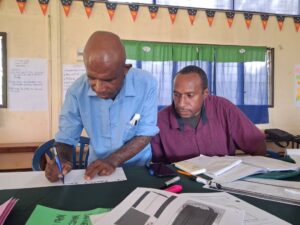
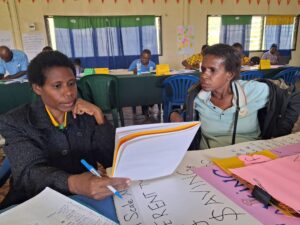
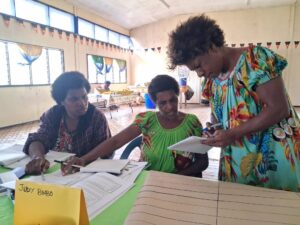
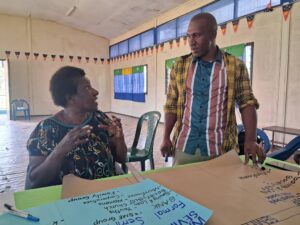
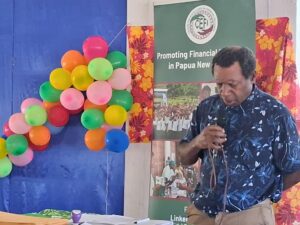
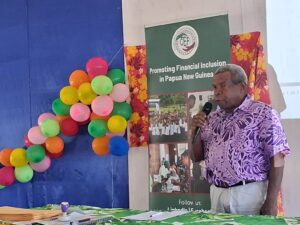
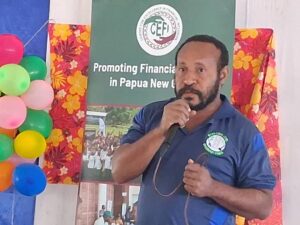
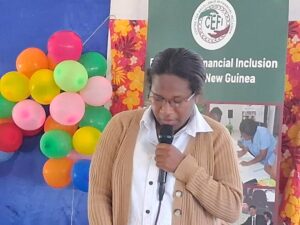
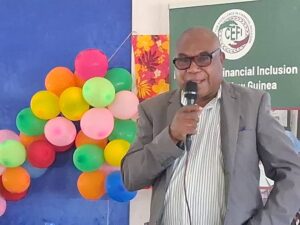
Photos Caption: Images from the mini graduation.


Ends.

About CEFI

CEFI was established under the Association Incorporation Act and officially launched on the 24th of April 2013. CEFI was endorsed by PNG’s National Executive Council (NEC) as the industry apex organization for coordinating, advocating and moniotoring all financial inclusion activities in PNG.

CEFI’s vision, mission and values focus on financial inclusion and literacy, poverty elimination and the promotion of vibrant financial institutional operation in Papua New Guinea.

Visit our website – www.thecefi.org

Media Contact:

Mr. Leslie Omaro

Communication Officer

Phone: 7464 5678

Email: lomaro@thecefi.org

Categories
News Article Uncategorized

CEFI and LMU Empower Workers with Financial Literacy Before Overseas Employment

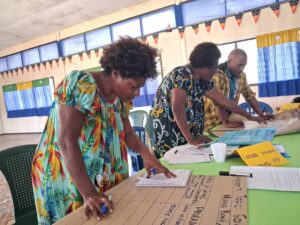
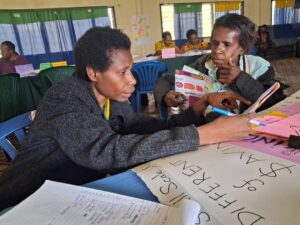
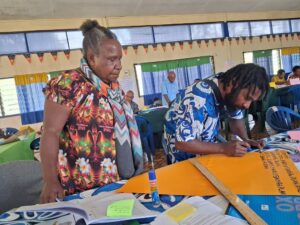
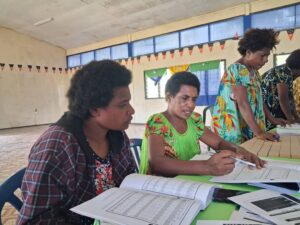
Participants of the Labour Mobility Unit (LMU) Work Ready Programme in Port Moresby have successfully completed a Financial Literacy Retail Training Programme aimed at strengthening their money management skills before taking up employment opportunities overseas.

The training, conducted from 23–25 February 2026 under the NCD Hub, focused on equipping participants with practical financial knowledge such as saving, budgeting and responsible financial decision-making. Organisers stated that the training was designed to ensure workers are financially prepared to manage their earnings effectively while working abroad.

According to the programme schedule, the participants were introduced to key financial literacy modules including savings, budgeting and financial planning. The sessions were intended to help participants develop sound financial habits and build long-term financial stability.

Acting Executive Director of the Centre for Excellence in Financial Inclusion (CEFI), Mr Peter Samuel, attended the mini graduation ceremony held on Wednesday, 25 February.

He congratulated the participants on successfully completing the training and encouraged them to apply the knowledge they had gained when they begin working overseas.

Mr Samuel urged the trainees to act as responsible representatives of Papua New Guinea under the Labour Mobility arrangements.

“You must put into practice what you have learned during this training and be good role models for Papua New Guinea when you work overseas,” Mr Samuel said.

He also acknowledged the strong collaboration between CEFI, the Labour Mobility Unit and the National Capital District Commission (NCDC) in delivering the training programme.

Mr Samuel thanked both organisations for their continued partnership in ensuring Papua New Guineans are equipped with essential financial literacy skills before departing for overseas employment.

Labour Mobility Unit Training and Skills Development Manager, Ms Lynna Joel, highlighted the importance of ongoing training initiatives that help workers strengthen their professional profiles for prospective employers.

Ms Joel explained that the LMU continues to introduce new programmes aimed at upskilling workers and improving their competitiveness in the international labour market.

She revealed that the unit is currently delivering safety training and has recently completed a pilot programme on worker and family preparedness, which is now under review.

“The aim is to make our workers more marketable and productive so that when employers come to recruit, they can confidently select Papua New Guinean workers,” Ms Joel said.

She added that the preparedness programme is expected to be rolled out in April in the National Capital District and other locations.

Ms Joel further explained that LMU is working to ensure workers obtain relevant licences and practical competencies that will increase their employability overseas. She noted that several participants had already undertaken Mid-Works training through the Pacific Australia Skills programme, while the LMU continues to collaborate with training institutions to deliver employability skills development.

According to Ms Joel, all completed training programmes are recorded in the LMU’s in-country recruitment database, allowing qualified candidates to be presented to potential employers seeking workers from Papua New Guinea.

She also thanked participants for taking part in the pilot training and encouraged them to share feedback that will help improve future programmes.

Meanwhile, participant Dorothy Veapi said the training had encouraged many attendees to reflect on how they manage their finances.

Ms Veapi explained that discussions on budgeting, saving and maintaining financial records helped participants realise the importance of monitoring their income and expenditure.

“As we discussed budgeting and managing our savings, we recognised that keeping track of our income and expenses is essential,” Ms Veapi said.

She noted that many participants came to understand that small but consistent financial habits can lead to long-term financial stability and independence.

Ms Veapi added that the workshop also reminded participants that financial literacy is not only a practical skill but also a personal responsibility.

“Once again, thank you to CEFI, the Labour Mobility Unit, and the World Bank for equipping us with the knowledge and skills that will guide us not only now, but into our future endeavours,” she said.

During the training, participants were introduced to core financial literacy concepts and the importance of saving regularly. The budgeting module helped participants set financial goals, examine their money management habits and understand how to create practical budgets.

Participants also learned the importance of monitoring cash flow and maintaining accurate financial records, particularly for workers who will earn regular incomes while working abroad.

Throughout the programme, participants engaged in recap sessions and discussions to reinforce key lessons. The training concluded with a summary session, programme evaluation and a graduation ceremony recognising those who successfully completed the course.

Organisers stated that the Financial Literacy Retail Training Programme forms an important component of the LMU Work Ready Programme, ensuring participants are financially prepared before entering overseas employment.

They explained that the initiative aims to empower workers with the knowledge and confidence to manage their earnings responsibly, support their families and contribute positively to their communities when they return to Papua New Guinea.

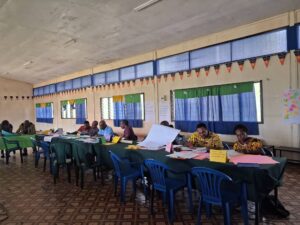
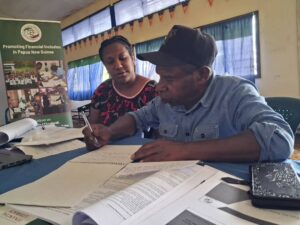
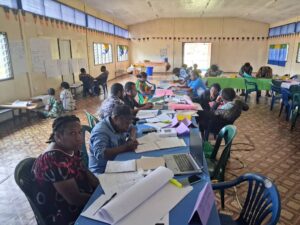
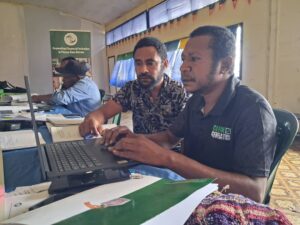
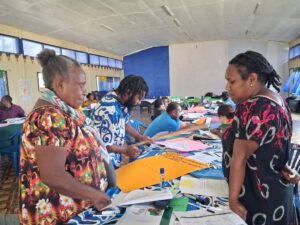
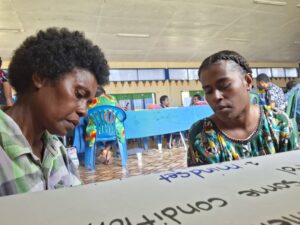
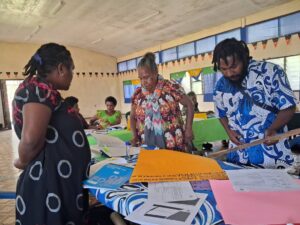
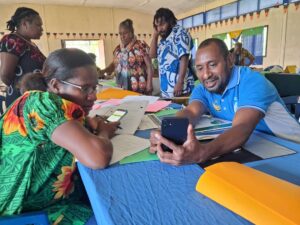
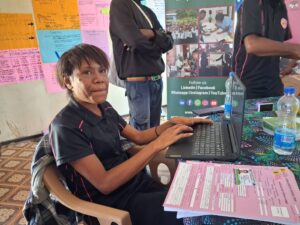
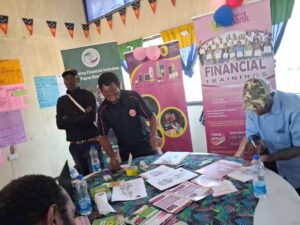
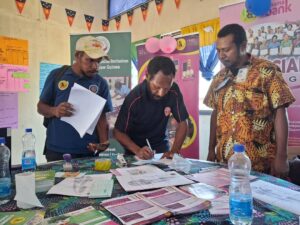
Photos caption: Images show the mini graduation  of participants of the Labour Mobility Unit (LMU) Work Ready Programme in Port Moresby.


Ends.

About CEFI

CEFI was established under the Association Incorporation Act and officially launched on the 24th of April 2013. CEFI was endorsed by PNG’s National Executive Council (NEC) as the industry apex organization for coordinating, advocating and moniotoring all financial inclusion activities in PNG.

CEFI’s vision, mission and values focus on financial inclusion and literacy, poverty elimination and the promotion of vibrant financial institutional operation in Papua New Guinea.

Visit our website – www.thecefi.org

Media Contact:

Mr. Leslie Omaro

Communication Officer

Phone: 7464 5678

Email: lomaro@thecefi.org

Categories
Media Releases Uncategorized

Empowering Women Entrepreneurs: CEFI and BLP Celebrate Success Stories at International Women’s Day 2026

Papua New Guinea women entrepreneurs were recognized and celebrated for their resilience and business achievements during an International Women’s Day event hosted by the Centre for Excellence in Financial Inclusion (CEFI) in Port Moresby.

The event, held at the Crown Hotel on Friday, March 6, brought together representatives from CEFI and Business Link Pacific (BLP), alongside six women small and medium enterprise (SME) owners who shared their inspiring journeys of starting and growing their businesses with the support of the two organizations.

Speakers at the event emphasized that empowering women through financial inclusion, access to business advisory services and financing opportunities remains critical to strengthening Papua New Guinea’s SME sector.

CEFI Acting Executive Director, Mr Peter Samuel, highlighted the significance of empowering women entrepreneurs and expanding financial inclusion.

Mr Samuel said International Women’s Day was not only a time to celebrate the achievements of women worldwide, but also an opportunity to acknowledge the challenges many women in Papua New Guinea continue to face in the social and economic landscape.

He noted that traditional cultural and societal structures had historically limited women’s participation in business and financial decision-making, although positive change was gradually taking place.

Mr Samuel explained that providing women with access to financial services remained central to CEFI’s mission.

“When we give a woman financial autonomy, she gains control of her own destiny and the power to prosper over situations and barriers that confront her,” he said.

He also highlighted the partnership between CEFI and Business Link Pacific, a programme funded by the New Zealand Ministry of Foreign Affairs and Trade, which supports SMEs through advisory services, financial solutions and business development support.

Mr Samuel said CEFI works to identify and prepare women-owned SMEs through training and diagnostic assessments before referring them to BLP for further assistance, including advisory services, grants, concessional loans and access to the Co-Investment Fund.

According to Mr Samuel, the collaboration has enabled many women to transform their business ideas into sustainable enterprises.

“When we invest in women, the benefits extend to families, communities and the wider economy,” he added.

Business Link Pacific Programme Director Mr Steve Knapp reaffirmed the organization’s commitment to supporting women-led small businesses across Papua New Guinea.

Delivering the keynote address, Mr Knapp explained that BLP focuses on strengthening micro, small and medium-sized enterprises so they can grow, expand and create employment opportunities.

He noted that women entrepreneurs remain central to the programme’s strategy, with BLP intentionally prioritizing women-led businesses while also supporting youth, rural and marginalized communities.

Mr Knapp highlighted that BLP provides grants, loans and business advisory services through a network of accredited advisors who assist SMEs in improving their operations and accessing finance.

He said partnerships with financial institutions such as Women’s Micro Bank and Kina Bank had enabled many women entrepreneurs to secure capital to expand their businesses.

Mr Knapp also acknowledged the strong collaboration with CEFI in improving financial access and business development support for women.

“When women-led businesses thrive, their communities benefit and everybody ends up better off,” he said.

BLP’s MERL, GEDSI and Communication Lead Ms Sandra Mendez congratulated women entrepreneurs for their contributions to economic and social development.

Ms Mendez emphasized that supporting women’s leadership produces far reaching benefits beyond economic gains.

“When we invest in women’s leadership, the return is not only economic but also social,” she said.

She highlighted that women SMEs play an important role in creating solutions for communities through sectors such as agriculture, tourism and trade.

While acknowledging the progress made, Ms Mendez said women entrepreneurs still face barriers including limited access to finance, markets and professional networks.

She noted that CEFI and BLP continue to work together to address these challenges by providing grants, advisory services and financial inclusion initiatives designed to strengthen women-led businesses.

A highlight of the event was the testimony session where six women SME owners shared their personal experiences of starting and growing businesses with the support of CEFI and BLP.

Business consultant Ms Kopi-Like Grammon, owner of KLG & Co Business Consultants, explained that she established her firm after gaining more than 15 years of professional experience in accounting.

She said her partnership with BLP since 2019 had helped expand networks and provide SMEs with affordable access to advisory services.

Ms Grammon noted that through BLP’s subsidy scheme, her firm assists businesses with financial management, loan applications and compliance.

“When we invest in one another through mentorship and inclusion, we all move forward together,” she said.

Ms Anne-Shirley Korave, founder of Queen Pads, shared that her entrepreneurial journey began when she was young, helping her mother sell cakes by the roadside in Eastern Highlands Province.

She said the experience taught her the value of money and eventually inspired her to establish Queen Pads in 2018 after leaving her accounting job despite financial uncertainty.

“My bank balance was zero, and I had to figure things out,” she recalled.

Ms Korave said BLP supported her business by subsidizing professional services such as accounting and human resource support.

Meanwhile, Ms Lucy Wabi, owner of Mama’s Hardware, explained that her decision to start a hardware business was built on 27 years of experience in the industry.

Starting as a cashier after studying bookkeeping, she said the idea of establishing her own business developed through years of observing market demand.

“It’s not easy to start something, especially in a male-dominated industry,” Ms Wabi said, encouraging women to take calculated risks and believe in their potential.

Ms Keslyn M. Wabiyau, founder of Khay Consultancy Service, said her business journey began unexpectedly after a USAID-funded project she managed came to an end.

With more than 15 years’ experience in accounting and operations, she decided to start her consultancy with encouragement from her husband.

She said support from the BLP programme strengthened her role as a business advisor assisting SMEs.

“Whatever you’re good at, that’s your talent… that’s where your business will succeed,” Ms Wabiyau said.

Entrepreneur Ms Gou Ava, founder of Blue Green Initiative, shared that she began her poultry business in Central Province with only 100 layer chickens despite having a background in environmental science rather than business.

She said a K10,000 SME grant from BLP through CEFI in 2023 significantly expanded her operations.

The funding enabled her to build additional poultry housing and purchase more chickens, increasing egg production to about 1,000 eggs per week.

Ms Ava described the grant as “very transformative” and encouraged women entrepreneurs to turn their ideas into sustainable businesses.

Ms Ruth Kiage, owner of Ezer Food Supplies, said she started her small business selling clothes and operating a food stall with limited knowledge of business management.

She explained that she later attended a business workshop where she was introduced to the BLP programme.

With support from BLP advisers, she completed a business health check and successfully applied for a grant that enabled her to purchase equipment and expand her food stall.

“Thank you BLP… now I am able to take steps forward in my business,” Ms Kiage said.

Ends.


Captions:

Image 1: CEFI Acting Executive Director, Mr. Peter Samuel, delivering his speech to women SME participants at the International Women’s Day event.

Image 2: Staff from CEFI, BPNG, BLP and the New Zealand High Commission pose for a group photo with women SME representatives during the International Women’s Day event.

Image 3: (From left to right) Founder of Mama’s Hardware,  Ms.Lucy Wabi; CEFI Acting Executive Director, Mr Peter Samuel; and Senior Development Programme Coordinator at the New Zealand High Commission, Ms. Theresa Reu, cut the International Women’s Day cake.

Image 4: Ms Ruth Kiage, owner of Ezer Food Supplies, one of six women SME representatives invited to share her business journey at the International Women’s Day event hosted by CEFI.

Image 5: Women participants pictured during the International Women’s Day event hosted by CEFI.


Ends.

About CEFI

CEFI was established under the Association Incorporation Act and officially launched on the 24th of April 2013. CEFI was endorsed by PNG’s National Executive Council (NEC) as the industry apex organization for coordinating, advocating and moniotoring all financial inclusion activities in PNG.

CEFI’s vision, mission and values focus on financial inclusion and literacy, poverty elimination and the promotion of vibrant financial institutional operation in Papua New Guinea.

Visit our website – www.thecefi.org

Media Contact:

Mr. Leslie Omaro

Communication Officer

Phone: 7464 5678

Email: lomaro@thecefi.org

Categories
Impact Stories Uncategorized

Saving Smart: One Woman’s Journey to Financial Confidence

Rita Krai, a 37-year-old married mother of five from Manda village in the Western Highlands, is a self-employed Rural Engagement Officer. Despite having completed Grade 12, Rita struggled with managing her finances—particularly with budgeting and saving. However, her financial outlook took a positive turn after attending a Financial Literacy Training course facilitated by the Centre for Excellence in Financial Inclusion CEFI, in Port Moresby from 3rd to 7th March, 2025.

Before the training, Rita faced several financial challenges, including difficulties in managing money effectively and saving for future needs. She admitted to spending unwisely without prioritizing essential needs. The training, which focused on modules such as Savings and Budgeting, equipped her with practical knowledge and strategies to take control of her finances.

Following the training, Rita adopted a more disciplined approach to spending. She now focuses on meeting essential needs and actively sets aside money for savings. This change has not only improved her personal financial situation but also positively influenced her family. By sharing what she learnt, her household now manages to stretch their finances over two weeks and work towards long-term goals such as purchasing a vehicle and covering school fees.

Rita noted that one of the standout aspects of the training was the emphasis on saving. She is confident in applying the techniques she learnt and is determined to train others in her community. However, she acknowledges that family obligations remain a challenge but believes the training has given her the confidence to manage such pressures more effectively.

Rita’s story is an example of how targeted financial education can create lasting behavioral change and contribute to improved livelihoods in rural communities.

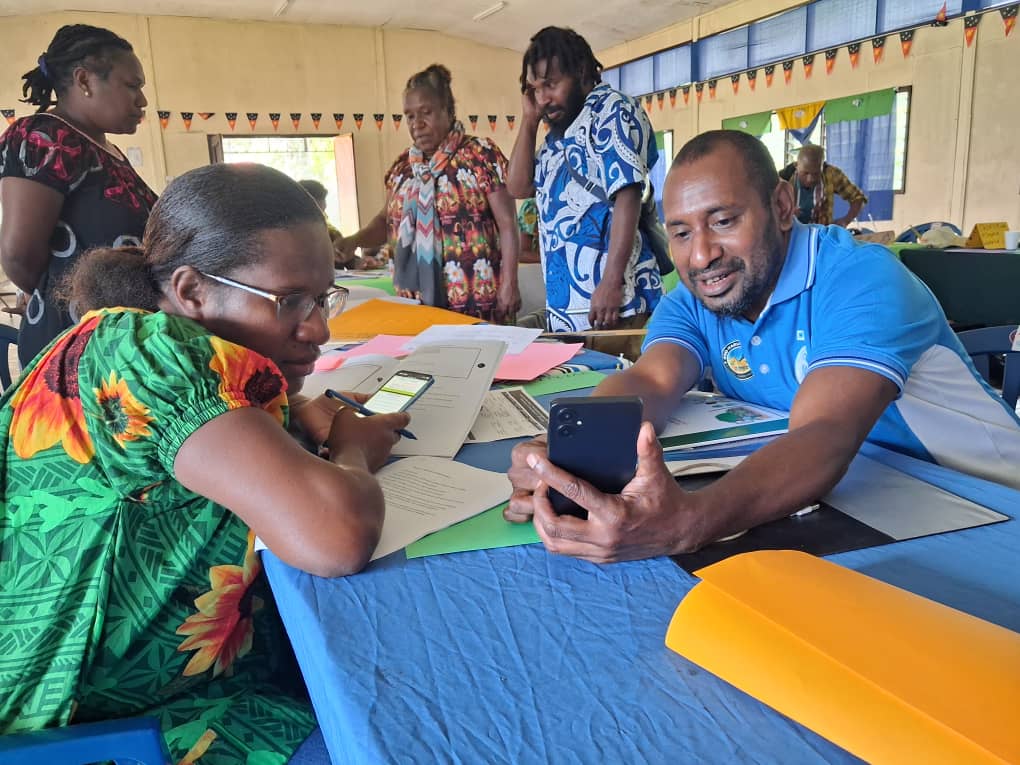
Image Caption: Rita (middle) with two of her colleagues who traveled in from Mt. Hagen to attend the Financial Literacy training.

error: We are sorry, you are not able to copy content. Please content site administrator for access to content.

Join our Mailing list!

Get all latest news, exclusive deals and academy updates.