+675 322 5300

Call to speak to our team

info@thecefi.org

Contact our team via email

Mon - Fri: 8:00 - 4:30

We maintain normal hours

Categories
Media Releases

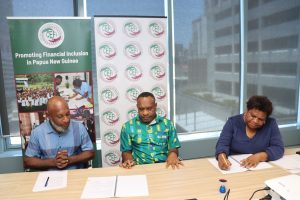
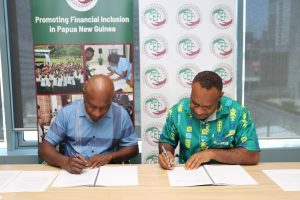
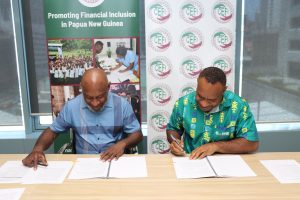
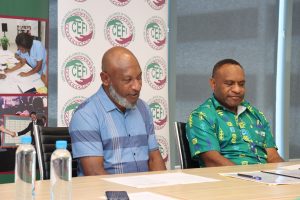
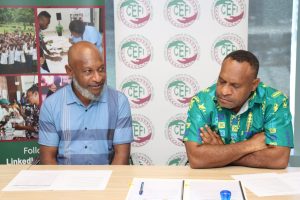
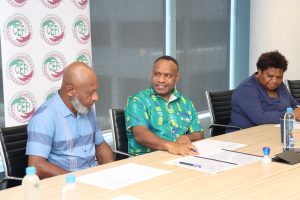
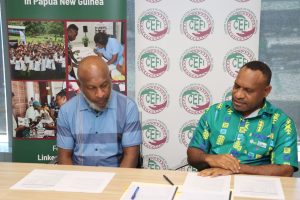
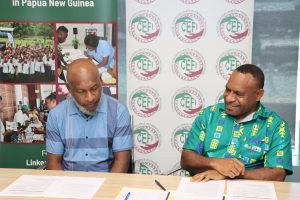
CEFI and DICT Sign MoU to Advance Digital Financial Inclusion in Papua New Guinea

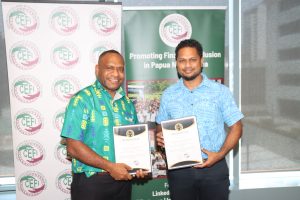
The Centre for Excellence in Financial Inclusion (CEFI) and the Department of Information and Communications Technology (DICT) have formalised a strategic partnership to strengthen digital financial inclusion, promote technological innovation and expand access to digital services across Papua New Guinea.

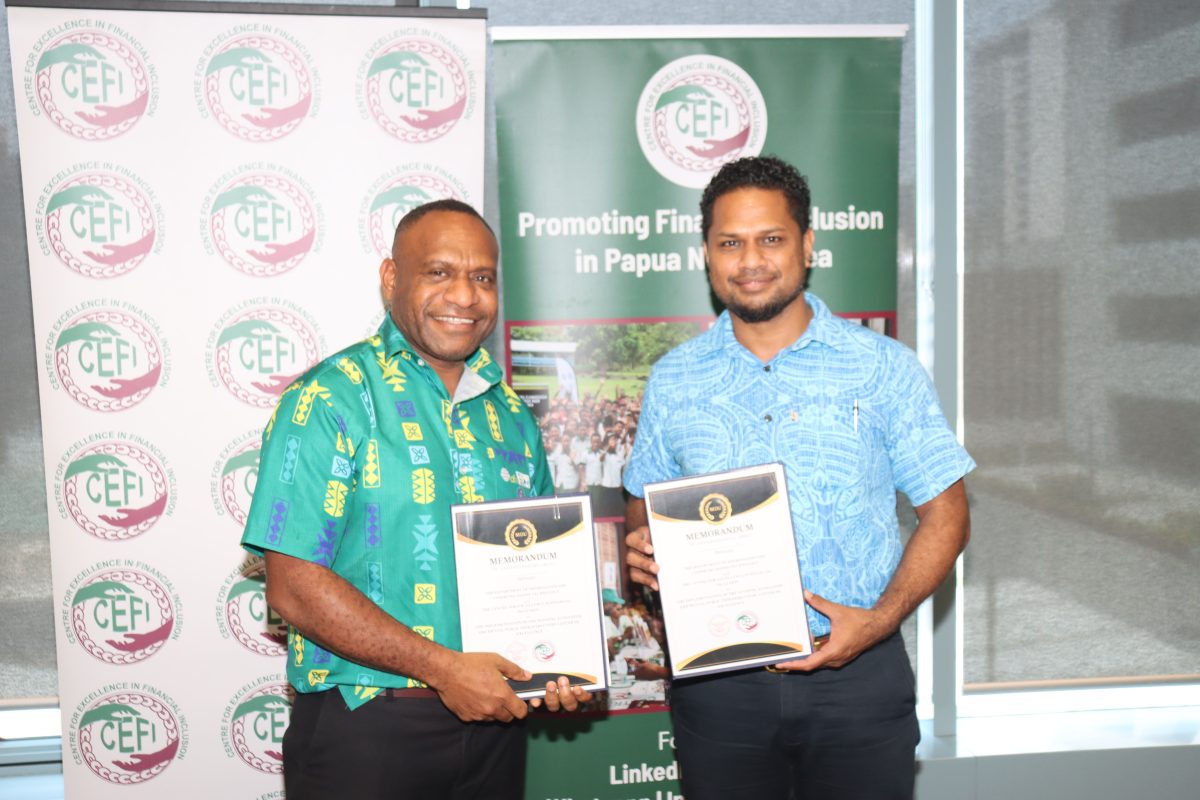
The Memorandum of Understanding (MoU), signed in Port Moresby on Friday, 30 October 2026, establishes a collaborative framework for the phased implementation of the SevisPNG Ecosystem and the Digital Public Infrastructure Centre of Excellence.

The partnership will advance digital identification, financial inclusion, trusted credentialing, innovation and institutional digital transformation through stakeholder engagement, knowledge sharing, capacity building and technical cooperation.

Speaking at the signing ceremony, DICT Secretary Mr Steven Matainaho acknowledged CEFI’s contribution to improving financial inclusion and emphasised the importance of connecting financial services with broader government digital transformation initiatives.

Mr Matainaho said the partnership would align both organisations’ programmes with national development priorities, particularly in digital public infrastructure, interoperability and digital identification.

He highlighted DICT’s ongoing implementation of digital identification services, supported by a Cabinet-endorsed digital identification policy, alongside the pilot implementation of its Service Wallet application.

According to Mr Matainaho, digital identification could help address barriers preventing citizens from accessing formal financial services while enabling greater participation in digital government services and the wider digital economy.

He also welcomed opportunities to collaborate on innovation initiatives and explore new technological solutions through the proposed centre of excellence.

Mr Matainaho said working groups would be established to identify priority areas, coordinate implementation and ensure DICT’s technology and policy initiatives supported CEFI’s financial inclusion mandate.

In response, CEFI Acting Executive Director Mr Peter Samuel welcomed the partnership, describing digital technology as an important enabler in addressing longstanding barriers to financial inclusion, particularly among underserved rural communities.

Mr Samuel acknowledged that conventional financial literacy awareness and outreach programmes alone could not adequately overcome geographical and infrastructure challenges affecting access to financial services.

He emphasised the need to strengthen payment system interoperability and accelerate the development of digital financial solutions, including instant payments, QR code payments and other accessible financial products.

Mr Samuel also highlighted the recently launched Innovation Hub PNG as an important platform for developing financial technology solutions, supporting emerging businesses and encouraging innovation within the financial sector.

He explained that the initiative would create opportunities for financial institutions to explore innovative products, including micro-superannuation and micro-pension services, to better serve underserved populations.

Mr Samuel further acknowledged DICT’s digital identification initiatives, noting their potential to address identification requirements that prevent many Papua New Guineans from opening bank accounts.

He proposed DICT’s participation in the Innovation Hub’s strategic advisory group to strengthen institutional coordination, encourage knowledge sharing and minimise duplication of existing programmes.

Both organisations reaffirmed their commitment to implementing practical and sustainable initiatives that strengthen financial inclusion and institutional capacity through training, knowledge sharing and technical cooperation.


Ends.


Image:


About CEFI

CEFI was established under the Association Incorporation Act and officially launched on the 24th of April 2013. CEFI was endorsed by PNG’s National Executive Council (NEC) as the industry apex organization for coordinating, advocating and monitoring all financial inclusion activities in PNG.

CEFI’s vision, mission and values focus on financial inclusion and literacy, poverty elimination and the promotion of vibrant financial institutional operation in Papua New Guinea.

Visit our website – www.thecefi.org

Media Contact:

Mr. Leslie Omaro

Communication Officer

Phone: 79736883

Email: lomaro@thecefi.org

Categories
News Article

CEFI and Sandaun Provincial Government Sign MoU to Expand Financial Inclusion in West Sepik

The Centre for Excellence in Financial Inclusion (CEFI) and the Sandaun Provincial Government (SPG) have signed a Memorandum of Understanding (MoU) to strengthen access to financial services, promote financial literacy and support economic development across West Sepik Province.

The agreement was signed on Thursday, 29 October 2026, in Vanimo, marking a commitment to bring financial inclusion programmes closer to rural communities, small businesses and underserved populations.

The partnership supports implementation of the National Financial Inclusion Strategy (NFIS) 2023–2027 and seeks to integrate its three strategic objectives into provincial planning, implementation and monitoring: a financially competent population, effective digital financial infrastructure and deepened financial services delivery.

CEFI Acting Executive Director, Mr Peter Samuel, said limited banking infrastructure, insufficient financial knowledge and restricted access to credit continued to prevent many Papua New Guineans from participating fully in the formal economy.

Mr Samuel highlighted key financial inclusion statistics for West Sepik Province, emphasising the importance of expanding access to formal financial services to support economic growth and strengthen provincial revenue generation. He revealed that the province recorded 129,766 deposit accounts, seven physical bank branches, eight automated teller machines (ATMs), 216 EFTPOS merchants and 25 banking agents. Additionally, the province registered 30,100 mobile financial services accounts, including 8,623 held by women, and 7,947 credit accounts. Mr Samuel stressed that these figures demonstrated significant opportunities to bring more micro, small and medium enterprises (MSMEs) into the formal financial system. He explained that improving financial access and encouraging MSME formalisation would enable more businesses to participate in the formal economy, broaden the Goods and Services Tax (GST) base and contribute towards strengthening internal revenue generation for the province.

He explained that CEFI was established to address barriers to financial services, particularly for people living in rural and remote communities.

Under the agreement, CEFI will work with the SPG and financial institutions to facilitate the expansion of banking access points, including banking agents and automated teller machines, while promoting greater awareness of available financial products and services.

Mr Samuel emphasised that financial literacy was equally important in helping families manage their income, develop savings habits and make informed financial decisions.

“Our aim is to change the mindset of our people to think differently, have a relationship with money, and the country can change,” he said.

He outlined plans to support provincial officers through CEFI’s Training of Trainers programme, enabling them to deliver financial literacy education in communities throughout Sandaun.

Mr Samuel also encouraged the Provincial Government to establish a dedicated financial inclusion function within its Commerce Division and provide for its activities through recurrent budget allocations.

He said stronger coordination with financial institutions could increase economic participation and support provincial revenue generation.

Sandaun Provincial Administrator, Mr Jacob Areman, welcomed the agreement, describing it as a timely partnership that aligned with the administration’s vision of improving livelihoods and expanding opportunities for grassroots communities.

“This programme will open the mindset of our people on how to save. When you save money, savings will open the door to other opportunities,” Mr Areman said.

He said practical training in budgeting, saving and responsible spending would help residents make better use of their earnings, particularly as new economic opportunities emerged.

Mr Areman highlighted Sandaun’s strategic location as a gateway to Asia and its potential for trade, investment and small business development.

He noted that existing small and medium enterprises needed stronger financial management skills to grow their businesses, maintain bank accounts and access appropriate financial services.

He also welcomed financial education programmes for young people, recognising the value of developing positive savings habits from an early age.

The initiative also aims to build a savings culture by connecting financial education with opportunities to use banking services.

The MoU provides a framework for collaboration on financial education, improved banking access and provincial coordination, with activities intended to complement existing economic development initiatives.

Both organisations reaffirmed their commitment to working together to help communities participate more actively in the economy, strengthen financial resilience and improve living standards across Sandaun Province.

Ends.


Top of Form


Bottom of Form

About CEFI

CEFI was established under the Association Incorporation Act and officially launched on the 24th of April 2013. CEFI was endorsed by PNG’s National Executive Council (NEC) as the industry apex organization for coordinating, advocating and monitoring all financial inclusion activities in PNG.

CEFI’s vision, mission and values focus on financial inclusion and literacy, poverty elimination and the promotion of vibrant financial institutional operation in Papua New Guinea.

Visit our website – www.thecefi.org

Media Contact:

Mr. Leslie Omaro

Communication Officer

Phone: 79736883

Email: lomaro@thecefi.org

Categories
News Article Uncategorized

CEFI Equips 68 Graduates with Digital Financial Literacy Skills in Kwikila

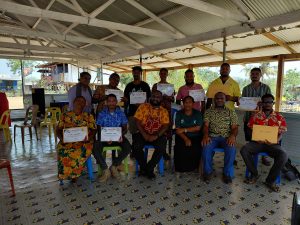
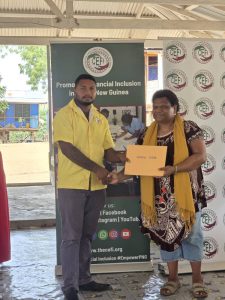
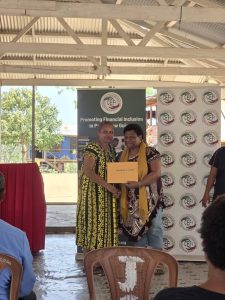
The Centre for Excellence in Financial Inclusion (CEFI) has recognised 68 participants who successfully completed Digital Financial Literacy (DFL) training in Kwikila, Rigo District, Central Province, marking another important step towards strengthening financial knowledge and promoting digital financial inclusion in rural communities.
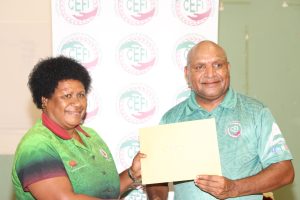
The participants, drawn from three training batches, were recognised during a mini graduation ceremony held at the David Kini School of Theology & Mission on Friday, 23 October 2026, under the theme “Empowering Communities Through Digital Financial Inclusion”.

The training equipped participants with practical knowledge and skills to access and use digital financial services responsibly, manage their finances effectively and make informed financial decisions.

Speaking at the ceremony, CEFI Acting Executive Director Mr Peter Samuel congratulated the 68 graduates on successfully completing their training and encouraged them to apply their newly acquired knowledge in their daily lives.

Mr Samuel emphasised that financial literacy was essential in empowering individuals and communities to participate confidently in the formal financial system.

He encouraged graduates to become advocates for financial literacy by sharing their knowledge with their families, churches and communities, particularly those with limited access to financial education and banking services.

Mr Samuel also highlighted the importance of partnerships in advancing financial inclusion throughout Papua New Guinea.

He acknowledged that expanding financial education and access to financial services required collective efforts from communities, financial institutions, development partners, educational institutions and government agencies.

CEFI’s commitment to strengthening financial literacy at the grassroots level was further reinforced through its network of 16 Digital Financial Literacy trainers working across the country.

Mr Samuel recognised the trainers for their dedication and commitment to bringing essential financial knowledge and practical skills closer to communities.

The training programme focused on helping participants understand mobile banking and other digital financial services, develop responsible money management practices and recognise potential risks associated with digital financial transactions.

Particular emphasis was placed on protecting individuals against scams, fraud and other financial risks as digital banking services become increasingly accessible.

CEFI also acknowledged the valuable contributions of its partners and stakeholders in supporting the successful delivery of the training.

The David Kini School of Theology & Mission provided the venue for the first training batch, while The Salvation Army hosted the second and third batches.

Financial institutions MiBank and Mama Bank participated in the graduation ceremony, supporting awareness of available banking services and encouraging the responsible use of formal financial products.

The initiative also received funding support from APEP, while the FinValue team provided technical advice and assistance to strengthen programme implementation.

CEFI expressed its appreciation to the Kwikila community for its participation and support throughout the training programme.

The graduation highlighted the importance of delivering practical financial education at the community level, particularly in areas where access to formal banking services and digital financial information remains limited.

Beyond recognising the achievements of the 68 graduates, the ceremony reinforced the importance of collaboration between financial institutions, development partners and local communities in building financial capability.

Through its continued delivery of Digital Financial Literacy training, CEFI aims to empower more Papua New Guineans with the knowledge and confidence to use digital financial services safely, responsibly and effectively.

The Kwikila graduation represents another contribution towards CEFI’s broader efforts to promote financial education, strengthen community participation and advance financial inclusion throughout Papua New Guinea.


Ends.

Images:


Categories
Media Releases

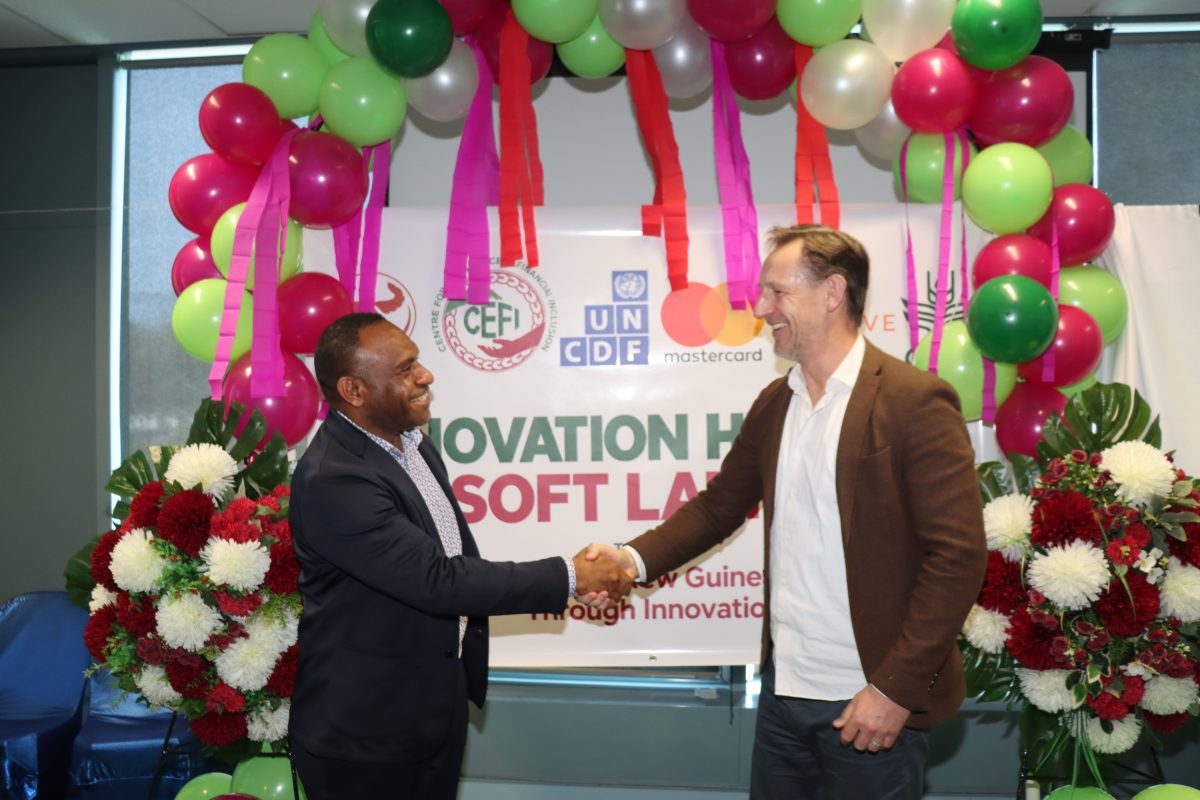
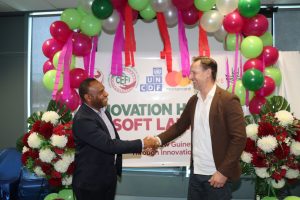
CEFI Soft Launches PNG Innovation Centre to Strengthen Digital Financial Inclusion

The Centre for Excellence in Financial Inclusion (CEFI) marked the soft launch of PNG Innovation Centre on Wednesday, 21 October 2026, in Port Moresby, introducing a collaborative platform to support entrepreneurship, financial technology and digital financial inclusion across Papua New Guinea.

The Hub aims to support FinTech and AgriTech businesses, with a plan for the first 12 months focusing on establishing an advisory group, mapping the ecosystem, bringing ecosystem stakeholders together, supporting start-ups, and developing pathways to capital, with a focus on MSMEs, women’s participation and youth.

Both organisations (CEFI & Creative HQ) stressed the importance of complementing existing programmes, strengthening local expertise and building partnerships capable of sustaining the Centre beyond its initial development.

CEFI acknowledged support from BPNG, UNCDF, Creative HQ, Mastercard, NICTA and other stakeholders.

The soft launch marks the beginning of further work to establish PNG Innovation Centre and translate locally developed ideas into practical solutions that expand financial access and economic opportunities.

The launch followed a series of stakeholder consultation meetings during the preceding week, bringing together representatives from the financial sector, regulatory agencies, information and communications technology, development organisations, agriculture, trade and micro, small and medium enterprises (MSMEs).

Participating organisations included the Bank of Papua New Guinea (BPNG), National Information and Communications Technology Authority (NICTA), Department of Information and Communications Technology (DICT), United Nations Capital Development Fund (UNCDF), SME Corporation, Department of Agriculture and Livestock, and MiBank.

The consultations helped identify sector priorities, opportunities for cooperation and practical considerations to inform the Hub’s development.

The visiting Creative HQ delegation was led by General Manager Government Innovation, Mr Jonny Haddon, and included Chief Growth Officer, Dr Collin Kennedy, and Senior Innovation Specialist, Ms Claudia Rees.

The team was in Port Moresby to work with CEFI on developing PNG Innovation Centre, contributing technical expertise and experience from similar programmes in the Pacific.

Speaking at the launch, CEFI’s Acting Executive Director, Mr Peter Samuel, explained that the initiative grew from CEFI’s experience implementing financial inclusion programmes nationwide.

Geographical isolation, technological limitations and service delivery challenges continued to restrict access to financial services, creating a need for solutions designed around local conditions.

“The PNG Innovation Centre will not operate as a bank, investment fund or regulatory authority. Instead, it will provide a collaborative platform where entrepreneurs can develop practical solutions with support from technical experts, mentors and partners,” Mr Samuel said.

He explained that discussions with industry stakeholders led to a FinTech Incubation Centre proposal in 2024, subsequently shaped through engagement with UNCDF, Creative HQ and other partners.

“The initiative supports the National Financial Inclusion Strategy 2023–2027, particularly Strategic Objective Three, which promotes efficient digital financial infrastructure and responsible financial innovation,” he said.

Mr Samuel identified financial technology, digital financial inclusion and responsible digital innovation as central priorities.

He said although financial technology would provide the initial focus, the Hub could also support solutions in agriculture, MSME development, digital payments, digital literacy and digital identification.

“Solutions must respond to Papua New Guinea’s unique geographical, cultural and economic circumstances rather than simply adopting approaches developed elsewhere,” he said.

According to Mr. Samuel,  the PNG Innovation Centre would also help prepare eligible entrepreneurs to engage with BPNG’s existing regulatory sandbox, where appropriate financial solutions could be tested within an established regulatory framework.

Initially operating from CEFI’s existing office, the Hub would follow a phased approach while partners establish governance structures, operational arrangements, mentorship activities and sustainable funding mechanisms.

Demand and programme effectiveness would inform decisions about a dedicated facility.

Creative HQ’s Mr Haddon reaffirmed his organisation’s commitment to working alongside CEFI and other stakeholders to build a sustainable, locally driven platform.

“The Centre must reflect Papua New Guinea’s economic priorities, business environment and entrepreneurial needs rather than replicate models developed elsewhere,” Mr Haddon said.

Drawing on experience in Fiji, he highlighted the importance of institutional leadership, collaboration and technical support in helping emerging businesses move from ideas to viable products and services.

Mr Haddon outlined five proposed priorities for the first year: leadership, ecosystem mapping and connections, collaborative events, business growth support and access to capital.

These would include an advisory group, stronger links between existing organisations and opportunities for entrepreneurs to access expertise and financing.

He identified financial technology and agriculture as promising initial sectors, with opportunities to support MSMEs, employment and greater participation by women and young entrepreneurs.

“Coordinated technical assistance, mentorship, business development support and regulatory engagement can transform a promising idea into a viable commercial opportunity,” Mr Haddon said.


Ends


Categories
News Article Uncategorized

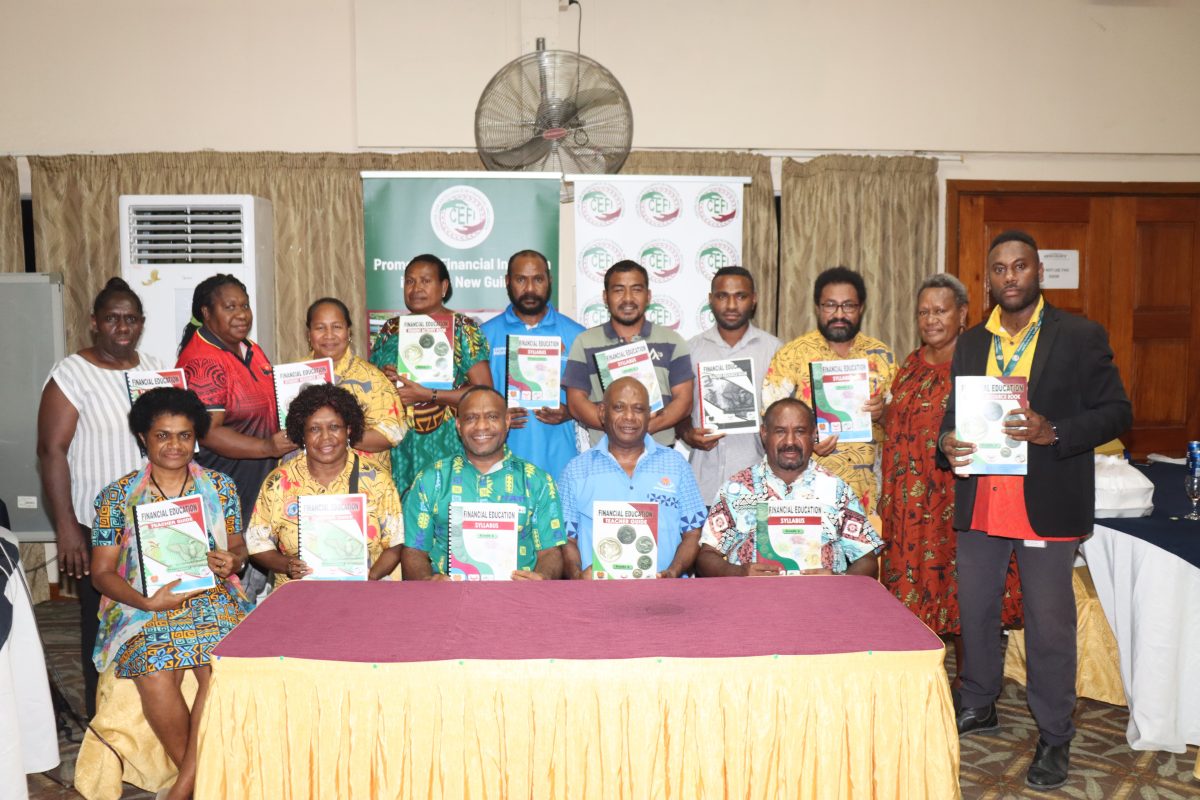
Financial Education Curriculum Reaches Key Milestone as Two-Week Validation Workshop Concludes

The development of Papua New Guinea’s Financial Education Curriculum has reached a significant milestone following the successful conclusion of a two-week validation workshop for Preparatory to Grade 6 learning materials in Port Moresby on 16 October 2026.

The workshop brought together curriculum specialists, teachers and key stakeholders to review and validate the draft syllabus, teachers’ guides and supporting learning materials, marking another important step towards integrating financial education into the national education system.

Speaking at the official closing, First Assistant Secretary for the Curriculum Development Division (CDD) of the Department of Education, Mr Steven Tandale, commended the commitment and collaborative efforts of all stakeholders involved in developing the curriculum.

Mr Tandale acknowledged the significant progress achieved, particularly the completion of draft curriculum materials for Preparatory to Grade 6, describing the achievement as an important milestone in the country’s financial education journey.

He recognised the contributions of curriculum officers, writers, designers and participating teachers, whose expertise and dedication had been instrumental throughout the development and validation process.

However, Mr Tandale emphasised that further work was necessary before the curriculum could be formally introduced into schools.

He explained that the next phase would involve piloting the materials in selected classrooms, gathering teachers’ feedback and making necessary improvements before final approval and implementation.

He confirmed that the curriculum materials had received approval in principle from the Board of Studies, with formal endorsement expected following completion of the remaining requirements.

Mr Tandale also highlighted the importance of adequate teaching resources, specialised teacher training and proper curriculum scheduling to ensure effective implementation.

He acknowledged the financial and logistical challenges associated with printing and distributing learning materials nationwide, reaffirming the Department’s commitment to working with CEFI to address these requirements.

Looking ahead, Mr Tandale outlined plans to extend financial education curriculum development to Grades 7 to 12 and proposed renewing the existing MoU to accommodate secondary education and other related activities.

CEFI Acting Executive Director, Mr Peter Samuel, reaffirmed the organisation’s commitment to supporting the implementation of financial education in schools, emphasising its importance in developing financially responsible future generations.

Mr Samuel commended the Department of Education for its leadership and acknowledged the dedication of curriculum specialists, teachers and stakeholders who contributed to the workshop’s success.

He stressed that introducing financial education at an early age was essential to addressing longstanding challenges associated with personal financial management, savings and responsible spending.

According to Mr Samuel, many Papua New Guineans had grown up without sufficient financial knowledge, making it increasingly important to equip children with practical money management skills through formal education.

He explained that integrating financial education into schools would help students understand the value of money, establish savings habits, set financial goals and make informed financial decisions.

Mr Samuel particularly emphasised the importance of promoting a savings culture, describing savings as a foundation for investment, financial independence and improved livelihoods.

He noted that although access to formal banking services had expanded, encouraging consistent savings habits remained an important challenge.

Mr Samuel further highlighted growing international interest in Papua New Guinea’s Financial Education Curriculum, particularly among Pacific Island nations, reflecting the country’s potential to demonstrate regional leadership in financial education.

He also acknowledged the curriculum’s earlier soft launch during the Alliance for Financial Inclusion Global Policy Forum in Port Moresby as another significant achievement.

In closing, both speakers expressed appreciation to participating teachers, curriculum specialists and stakeholders for their commitment throughout the validation process.

They reaffirmed their respective organisations’ commitment to advancing the remaining stages of curriculum development, including classroom piloting, teacher preparation and eventual nationwide implementation.


Ends.

Images:


Categories
News Article

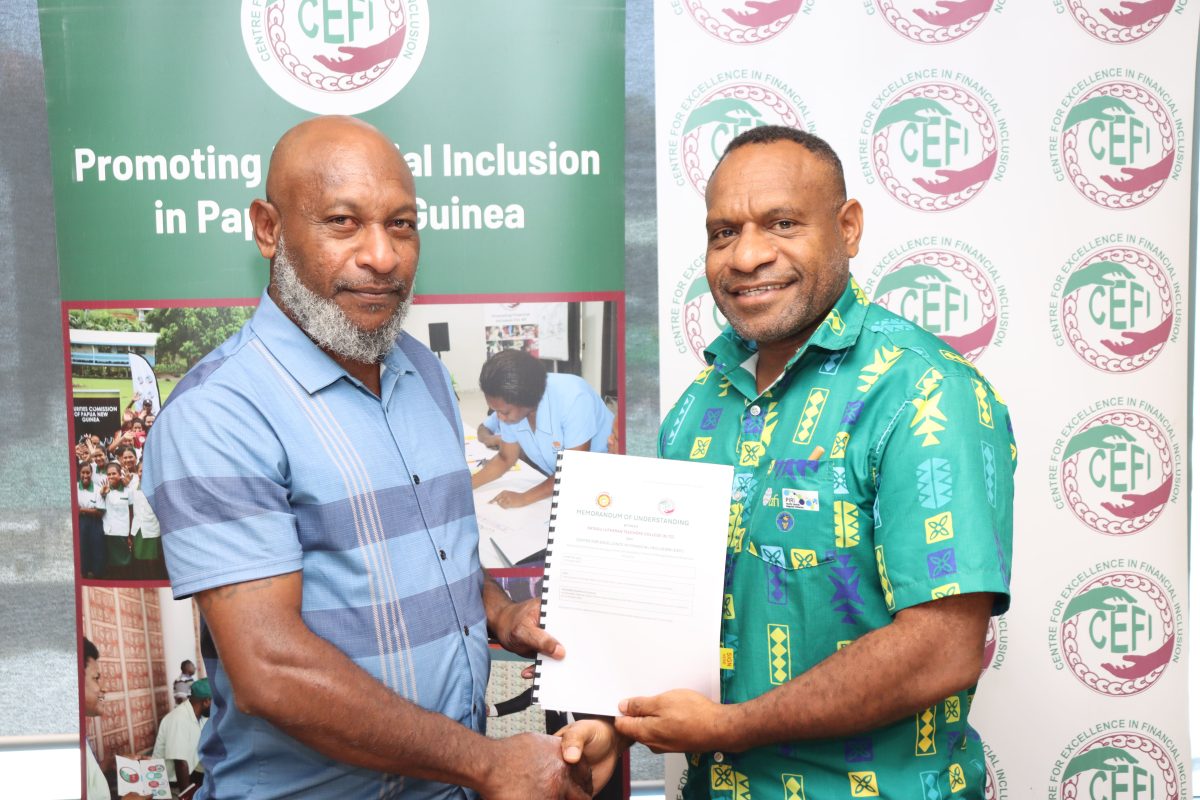
CEFI and Katagu Lutheran Teachers College Partner to Strengthen Financial Literacy Education in PNG

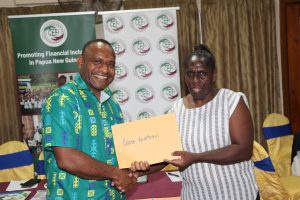
The Centre for Excellence in Financial Inclusion (CEFI) and Katagu Lutheran Teachers College (KLTC) have signed a Memorandum of Understanding (MoU) to strengthen financial literacy education among trainee teachers, school administrators and communities across Papua New Guinea.

The agreement was signed at the CEFI Office in Port Moresby on 16 October 2026, establishing a cooperative framework to develop financial literacy programmes, build teaching capacity and promote responsible financial management.

Located in Lower Benna Rural Local Level Government, Uggai-Bena District, Eastern Highlands Province, KLTC will serve as an important channel for extending financial education to future teachers and surrounding communities.

CEFI Acting Executive Director, Mr Peter Samuel, emphasised the influential role teachers play in shaping children’s attitudes, behaviour and understanding of financial responsibility.

“Teachers are key role models for our children at the initial stage where their cognitive development starts,” Mr Samuel said.

He explained that equipping trainee teachers with practical financial knowledge would enable them to introduce essential money management concepts, including savings, budgeting and distinguishing between needs and wants, to students from an early age.

Mr Samuel highlighted CEFI’s ongoing collaboration with the Department of Education to integrate financial education into the national school curriculum.

He said financial education modules had been developed and were undergoing further review and consultation with teachers to ensure their suitability across different grade levels.

The curriculum initiative is expected to progress towards a pilot rollout in schools in 2027, with teacher training institutions playing an important role in preparing educators for implementation.

Under the MoU, CEFI intends to facilitate Financial Literacy Training of Trainers programmes for KLTC lecturers and teachers, enabling them to transfer financial knowledge and practical skills to trainee teachers before they enter classrooms.

However, Mr Samuel stressed that meaningful outcomes would depend on translating the agreement into practical activities supported by proper planning, resources and trained personnel.

“Signing is another thing, of course, but to implement it is another challenge,” he said.

He reaffirmed CEFI’s commitment to working with KLTC to ensure financial education reaches schools and communities through trained educators.

“One can do things on its own, but they may be limited. But together as a team, I think we can make a big difference in the country,” Mr Samuel said.

Meanwhile, KLTC Board Chairman, Reverend Patmos Willie, welcomed the partnership, describing it as an important opportunity to strengthen teacher education and improve financial management practices within schools.

“What CEFI is doing is setting and building the next generation of public leaders who must be financially competent,” Reverend Willie said.

He emphasised that teacher training institutions must prepare graduates not only for classroom instruction but also for administrative responsibilities, including managing school resources and supporting effective financial decision-making.

“Let’s produce teachers who are not just teachers, but administrators. They must also have financial knowledge and capacity so that they can empower their board in the schools to begin to understand,” he said.

Reverend Willie acknowledged CEFI’s work in developing the Financial Education Curriculum and expressed KLTC’s readiness to participate in its proposed implementation.

“We are ready to trial out this curriculum if CEFI chooses what time frame to implement. We are ready to partner with CEFI to do that,” he said.

He identified budgeting, savings, responsible borrowing, digital financial safety and financial management as important areas where teachers and school administrators could benefit from additional training.

Beyond the college, KLTC intends to collaborate with CEFI to extend financial literacy programmes to school boards, serving teachers and surrounding communities.

Reverend Willie also outlined plans to organise financial literacy training for teachers working in Lutheran agency schools throughout Eastern Highlands Province, potentially during school semester breaks in 2027.

The proposed activities would be coordinated with provincial education authorities and participating schools, subject to further planning and agreement.

Both organisations recognised that effective implementation would require continued coordination, resource mobilisation and a practical work plan to guide training delivery and community outreach.

The partnership provides a foundation for developing financially capable educators who can strengthen money management practices within schools, households and communities while supporting broader financial inclusion objectives across Papua New Guinea.

Ends.

Images:

Categories
News Article

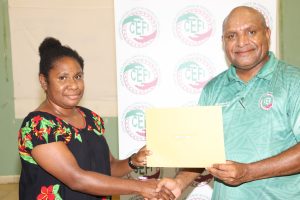
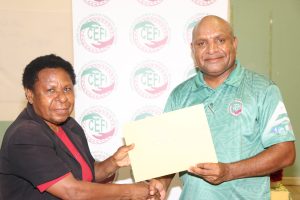
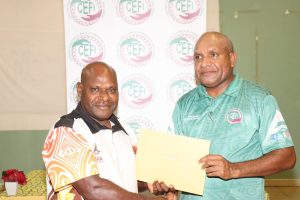
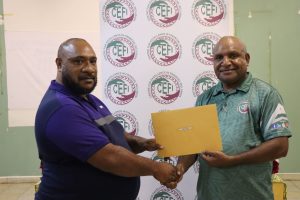
CEFI Certifies 35 Financial Literacy Trainers In East Sepik Province

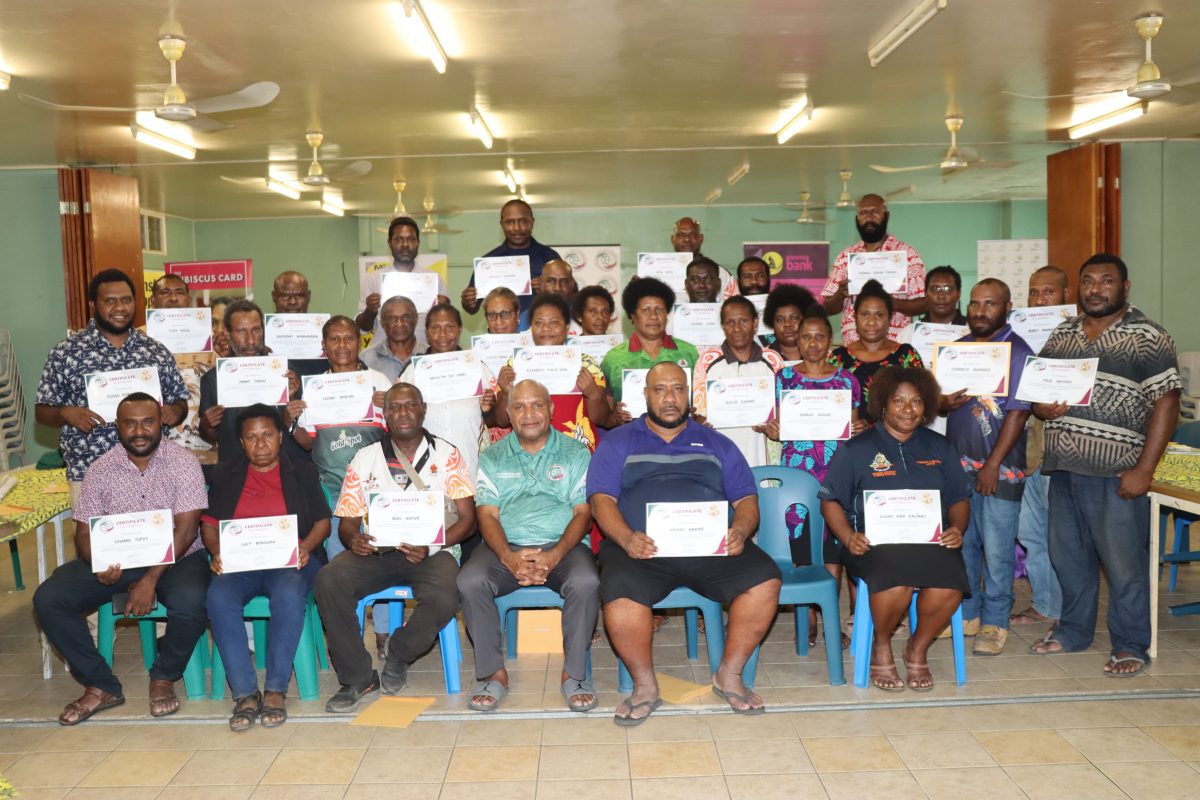
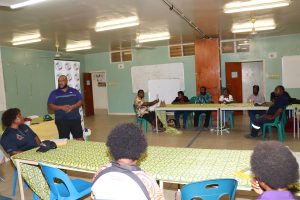
The Centre for Excellence in Financial Inclusion (CEFI) has certified 35 participants as Financial Literacy Trainers following the successful completion of a five-day Financial Literacy Training of Trainers (ToT) programme in Wewak, East Sepik Province.

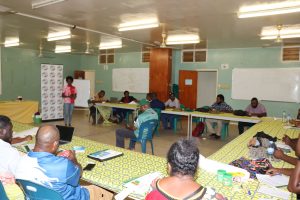
The training, held at the Sepik Centre of Hope from 28 September to 2 October 2026, brought together participants from key provincial divisions, including Commerce, Agriculture and Livestock, and Fisheries.

Facilitated by CEFI Senior Trainer Mr Sebastian Mugup, the programme aimed to equip participants with the knowledge, practical skills and confidence to deliver financial literacy education to individuals, families and communities across East Sepik Province.

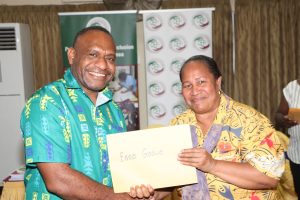
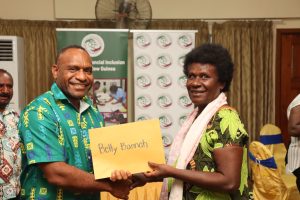
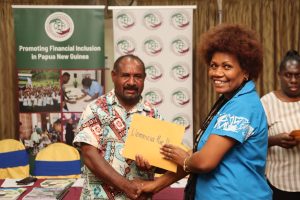
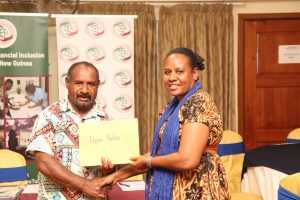
During the programme, CEFI Acting Executive Director Mr Peter Samuel visited the participants on Wednesday, 30 September 2026, and encouraged them to maximise the learning opportunity by strengthening their understanding of essential financial literacy topics, particularly Savings and Budgeting.

Mr Samuel emphasised the importance of applying the knowledge gained during the training to support communities in making informed financial decisions and adopting responsible money management practices.

He encouraged participants to return to their respective districts and share their newly acquired knowledge and skills with others, ensuring that the benefits of financial education extend beyond the training venue and reach communities throughout the province.

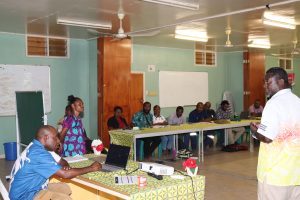
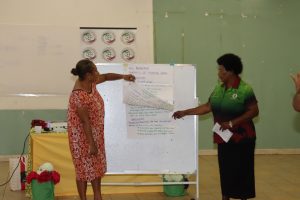
As part of his visit, Mr Samuel also observed participants delivering group presentations, which provided an opportunity for them to demonstrate their understanding of the training modules and develop their confidence in communicating financial literacy concepts to different audiences.

The practical sessions formed an important component of the programme, preparing participants to effectively deliver financial literacy training within their respective districts and communities.

The programme concluded on Friday, 2 October 2026, with a mini graduation ceremony during which all 35 participants were certified as Financial Literacy Trainers.

Through this initiative, CEFI continues to strengthen provincial capacity by developing a network of qualified trainers who can promote financial education and encourage responsible financial behaviour at the community level.

The programme also reinforces CEFI’s ongoing commitment to improving financial capability, promoting savings and budgeting practices, and expanding access to practical financial education across Papua New Guinea.

Images:


Join our Mailing list!

Get all latest news, exclusive deals and academy updates.